
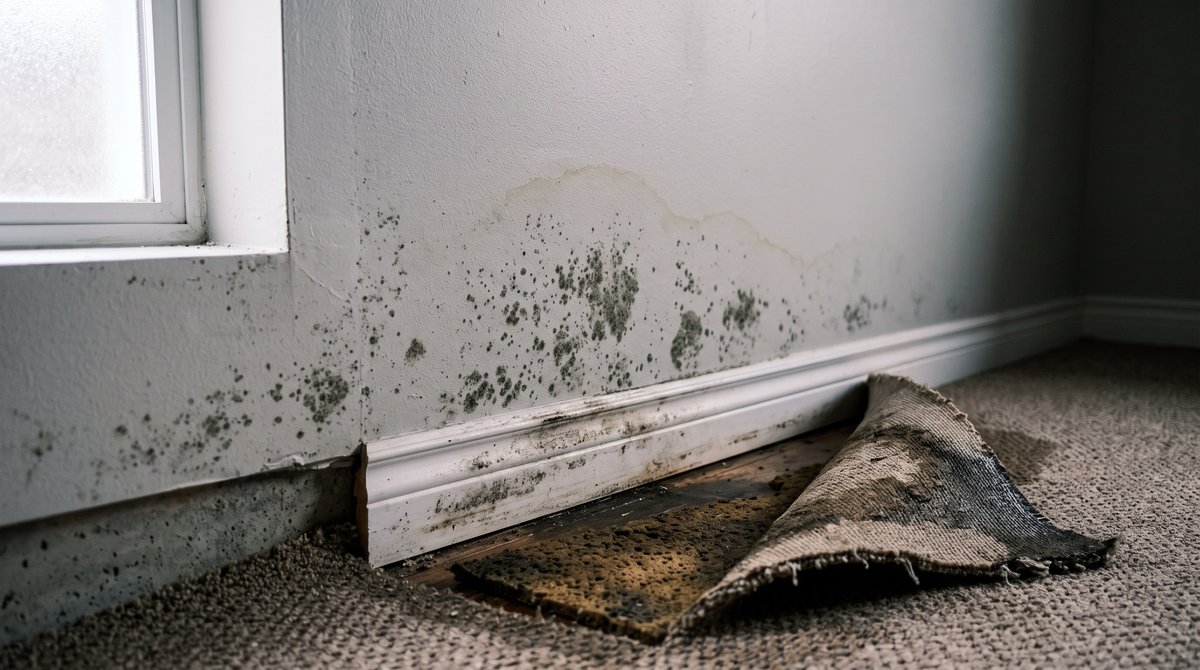
The carpet is wet, the fans are running, and somebody in the house has already asked the question that matters most: how fast does mould grow after water damage? The honest answer is faster than most people expect. Under the right conditions mould spores can begin germinating on wet drywall and carpet within 24 hours, colonies are established by 48 hours, and by day three you can often see them. That window is the reason restoration companies talk about the first two days so much. What happens inside it decides whether you are drying a basement or remediating one.
This guide lays out the growth timeline hour by hour, explains why Calgary’s dry climate does not protect the inside of your walls, ranks which materials are at risk first, and shows you exactly where the line sits between a cleanup you can do yourself and one that needs professional remediation.
Table of Contents
- The short answer: 24 to 48 hours
- The mould growth timeline after water damage
- Why Calgary’s dry climate does not protect you
- Which materials grow mould first
- How to stop the clock in the first 48 hours
- When to clean it yourself and when to call a professional
- What professional mould remediation involves
- Why DKI Calgary is the right choice for mould after water damage
- Frequently Asked Questions
Key Takeaways
- Mould can begin growing on wet building materials within 24 to 48 hours of water damage, which is the window Health Canada and the IICRC S520 standard both point to.
- Visible colonies usually appear between 48 and 72 hours, but growth inside wall cavities, under flooring and behind baseboards stays hidden far longer.
- Calgary’s dry outdoor air does not stop mould; the humidity that matters is the near-saturated air inside a wet wall, not the air outside.
- Drywall, carpet underpad and fibreglass insulation are the first materials to grow mould because they hold water and are made of, or coated in, organic material.
- Health Canada advises professional remediation for any mould area larger than 3 square metres, and for any amount when contaminated water or hidden growth is involved.
The short answer: 24 to 48 hours
Mould needs three things: moisture, a food source and a temperature it can tolerate. A water-damaged home supplies all three at once. Building materials like drywall paper, wood, carpet backing and the dust that coats everything are food. Room temperature is ideal. The water supplies the rest. Spores are always present indoors, so there is no waiting for them to arrive; the moment conditions are right, the ones already sitting on the surface start to germinate.
The IICRC S520 standard for professional mould remediation and Health Canada’s guidance on moisture and mould both work from the same principle: materials that are dried within about 48 hours rarely develop a mould problem, and materials that stay wet beyond that point usually do. Restoration is built around that clock.
The mould growth timeline after water damage
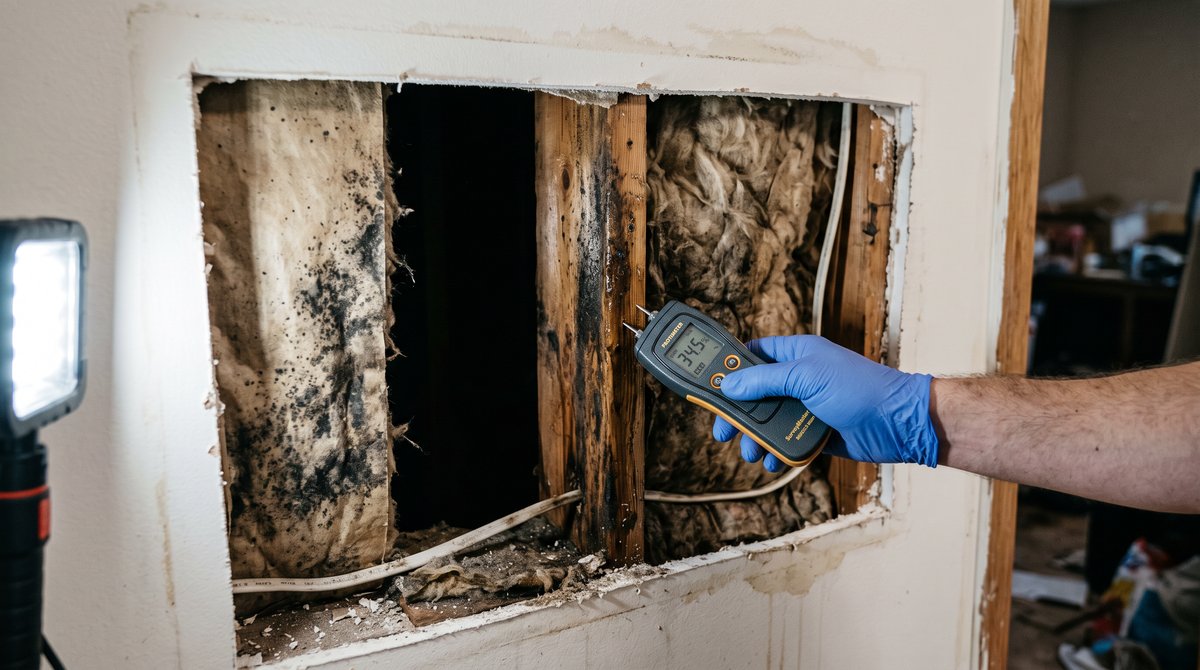
Every water loss is different, but the sequence is consistent enough to plan around. This is what is happening in a wet basement while you wait for a decision.
| Time since water damage | What is happening | What it means for you |
|---|---|---|
| 0 to 24 hours | Materials absorb water; spores on wet surfaces begin to germinate; nothing visible yet | Extraction and drying started now almost always prevents mould |
| 24 to 48 hours | Germinated spores send out root-like hyphae and begin colonizing drywall paper, underpad and wood | The last reliable window to dry materials in place |
| 48 to 72 hours | Colonies become visible as speckling or fuzzy patches; musty odour develops | Affected porous materials will often need removal, not just drying |
| 3 to 7 days | Growth spreads across surfaces and into wall cavities; spore release increases | Remediation with containment is usually required |
| 1 to 3 weeks | Extensive growth on framing and behind finishes; structural materials begin to degrade | Larger removal scope, higher cost, possible air quality issues in the home |
The timeline shifts with conditions. Warm water from a hot water tank, a high-humidity summer week or a leak behind a closed cabinet all push growth toward the fast end. Cool water on a concrete floor with the windows open in February moves slower. But the difference is hours, not days, and nothing about the range makes waiting a good strategy.
Why Calgary’s dry climate does not protect you
Calgary homeowners often assume mould is a coastal problem. Outdoor humidity here is low for much of the year, and it is true that a wet towel on a summer clothesline dries in an hour. The inside of a wet wall is a different environment entirely. Once water has soaked into drywall and the insulation behind it, the air inside that cavity sits near 100 percent relative humidity regardless of what the weather is doing outside. There is no airflow to carry the moisture away, and the materials release it slowly over days or weeks.
Two local habits make it worse. Finished basements are the norm in Calgary, so a leak reaches carpet, underpad, drywall and framing rather than a bare concrete floor. And winter losses happen with the furnace running and the windows shut, which means the moisture from a flood has nowhere to go but into the rest of the house. That is why a basement that looks dry on the surface can still fail a moisture reading a week later, and why the drying process described in our post on how long water damage takes to dry relies on measurement rather than appearance.
Which materials grow mould first
Mould goes where the food and the water are. Porous materials that hold moisture and contain organic matter are colonized first; dense, inorganic materials resist it.
| Material | Risk | Why |
|---|---|---|
| Drywall | Very high | Paper facing is a direct food source and the gypsum core holds water for days |
| Carpet and underpad | Very high | Underpad acts as a sponge and is almost never salvageable once soaked |
| Fibreglass and cellulose insulation | High | Traps moisture against framing; cellulose is itself organic |
| Wood framing and subfloor | Moderate to high | Organic, but dries well if reached within 48 hours |
| Concrete and tile | Low | Inorganic; mould grows only on the dust and residue sitting on them |
The practical rule: drywall and underpad that have been wet for more than two days usually come out, framing and subfloor can usually be dried and kept, and concrete needs cleaning rather than removal. Deciding which is which is what the moisture mapping at the start of a restoration job is for.
How to stop the clock in the first 48 hours
You cannot change how fast mould grows, but you can change how long the materials stay wet. In order:
- Stop the source. Shut off the water supply, stop the appliance, or get a tarp on the roof. Drying is pointless while water is still arriving.
- Get standing water out within hours, not days. A wet vacuum for small areas, professional extraction for anything larger than a room.
- Lift the carpet and remove the underpad. Carpet can often be dried; soaked underpad is the material most likely to grow mould under it.
- Open the wet wall. Removing baseboards and drilling small vent holes or cutting drywall at the tide line lets air reach the cavity. Sealed wet walls do not dry.
- Move air and remove humidity together. Fans alone push moisture into the air; without a dehumidifier it condenses somewhere else. Restoration equipment pairs air movers with commercial dehumidifiers for that reason.
- Measure, do not guess. A moisture meter tells you when framing is actually dry. Touch does not.
If the water was grey or black, from a sewer backup, a toilet overflow or groundwater, the rules change: contaminated water needs to be handled as a Category 3 loss regardless of timing, and porous materials it touched are removed rather than dried. Our guide to Category 1, 2 and 3 water damage explains the distinction.
When to clean it yourself and when to call a professional
Health Canada sets the line by area. A small problem is one to three patches, each under one square metre, and a homeowner can clean it with detergent, water, gloves and a mask. A moderate problem is more than three patches, or a patch between one and three square metres, which is still manageable with care and proper protection. An extensive problem is anything over three square metres, and Health Canada recommends professional help at that point.
Area is not the only trigger. Call a professional regardless of size if:
- The growth is inside a wall, under flooring or in a ceiling where you cannot see how far it goes.
- The water was contaminated: sewer backup, groundwater, or anything that sat for days.
- Someone in the home has asthma, allergies or a weakened immune system.
- The mould keeps returning after cleaning, which means the moisture source was never fixed.
- The HVAC system was running through the loss and may have circulated spores.
Our post on whether mould is dangerous covers the health side, and mould identification helps you tell what you are looking at.
What professional mould remediation involves
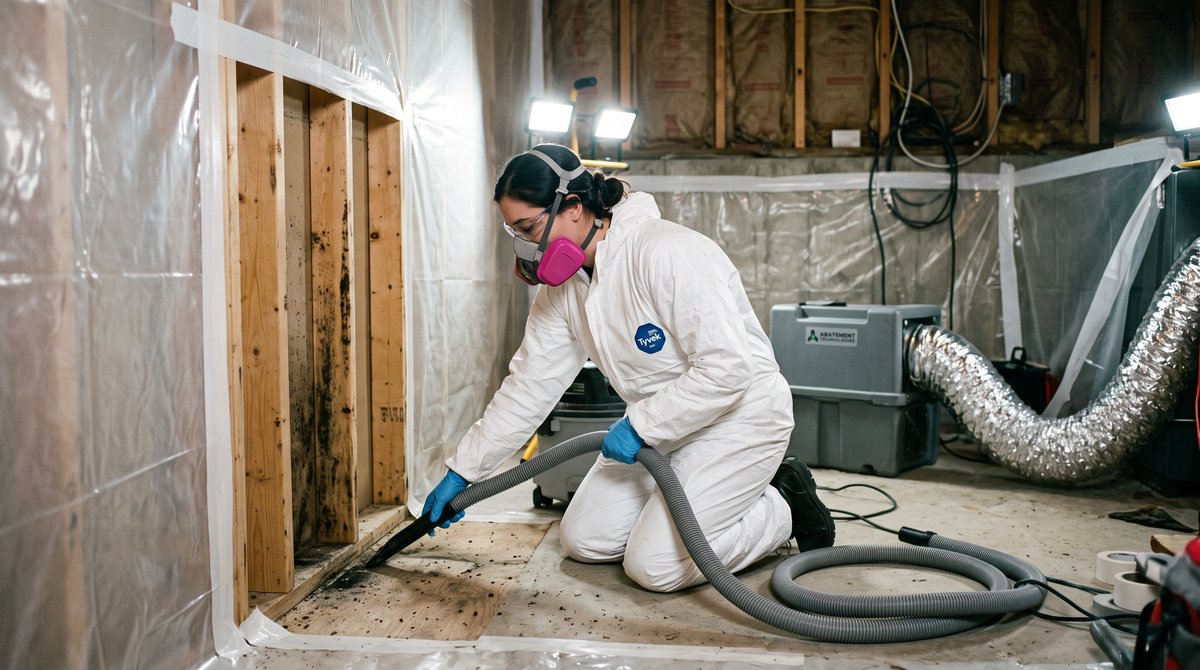
Remediation is removal, not treatment. Spraying a product on visible mould leaves the colony inside the material and the moisture that fed it. A proper job following the S520 standard runs through a fixed sequence:
- Assessment and moisture mapping to find every wet material, including the ones behind finishes.
- Containment with plastic sheeting and negative air machines so spores disturbed during the work do not spread through the house.
- Removal of contaminated porous materials, bagged and disposed of, followed by HEPA vacuuming and damp wiping of everything that stays.
- Drying of the remaining structure to verified moisture targets.
- Clearance, with a visual inspection and, where warranted, air sampling before the containment comes down and the rebuild starts.
Cost scales with the amount of material removed and how much containment is needed, which is why the same leak costs far less at day one than at day ten. We break down the numbers in what mould remediation costs in Calgary.
Why DKI Calgary is the right choice for mould after water damage
Water damage and mould are the same job at two different points on the clock, and DKI Calgary handles both. Our water and flood damage restoration crews respond 24/7 across Calgary and the surrounding communities to extract and dry within the 48-hour window, and our mould remediation team takes over when a loss has been sitting too long or growth is already established.
Technicians are IICRC certified in both water restoration and mould remediation, every job is moisture-mapped and documented for your insurer, and we contain and remove rather than spray and hope. From the first extraction to the rebuilt wall, our residential services cover the whole process under one roof.
Conclusion
How fast does mould grow after water damage? Fast enough that the first 48 hours decide the outcome. Spores germinate within a day, colonies establish by day two and become visible by day three, and Calgary’s dry weather offers no protection to the saturated air inside a wet wall. Drywall, underpad and insulation go first; framing and concrete can usually be saved if they are dried in time. Stop the source, get the water out, open the wet materials to air and measure them dry, and you avoid remediation altogether. Wait, and the same leak turns into containment, removal and a much larger bill.
Frequently Asked Questions
Can mould grow in 24 hours after a leak?
It can start. Spores on wet drywall or carpet begin germinating within the first 24 hours under typical indoor conditions, although nothing is visible yet. Growth you can see usually appears between 48 and 72 hours, which is why drying started on the first day almost always prevents a mould problem.
How do I know if mould is growing inside my walls?
A musty smell that does not go away, staining or bubbling paint near the floor, and moisture meter readings that stay high after the surface feels dry are the usual signs. The only way to confirm it is to open the wall at the tide line or have a restoration technician use a meter and, if needed, a small inspection cut.
Does mould grow in Calgary’s dry climate?
Yes. Outdoor humidity is irrelevant to the inside of a wet wall, where the air is close to saturated until the materials dry. Calgary’s finished basements and sealed winter homes mean water losses here grow mould just as readily as anywhere else if they are not dried promptly.
Will mould die if the area dries out?
Drying stops mould from growing, but it does not remove it. Dormant colonies and their spores remain on the material and reactivate the next time it gets wet, and dead mould can still trigger allergies. Materials that grew mould need to be cleaned or removed, not just dried.
How much mould is too much to clean myself?
Health Canada’s guidance is that patches under one square metre can be cleaned by a homeowner with detergent, gloves and a mask, moderate areas up to three square metres need more care, and anything over three square metres should be handled professionally. Hidden growth or contaminated water calls for a professional at any size.
Does home insurance cover mould from water damage?
Often only in part. Many Alberta policies cover mould that results directly from a covered sudden water loss, but cap the amount or exclude mould that developed because the water was left untreated. Fast, documented drying is the best way to keep a mould claim within what the policy will pay.