
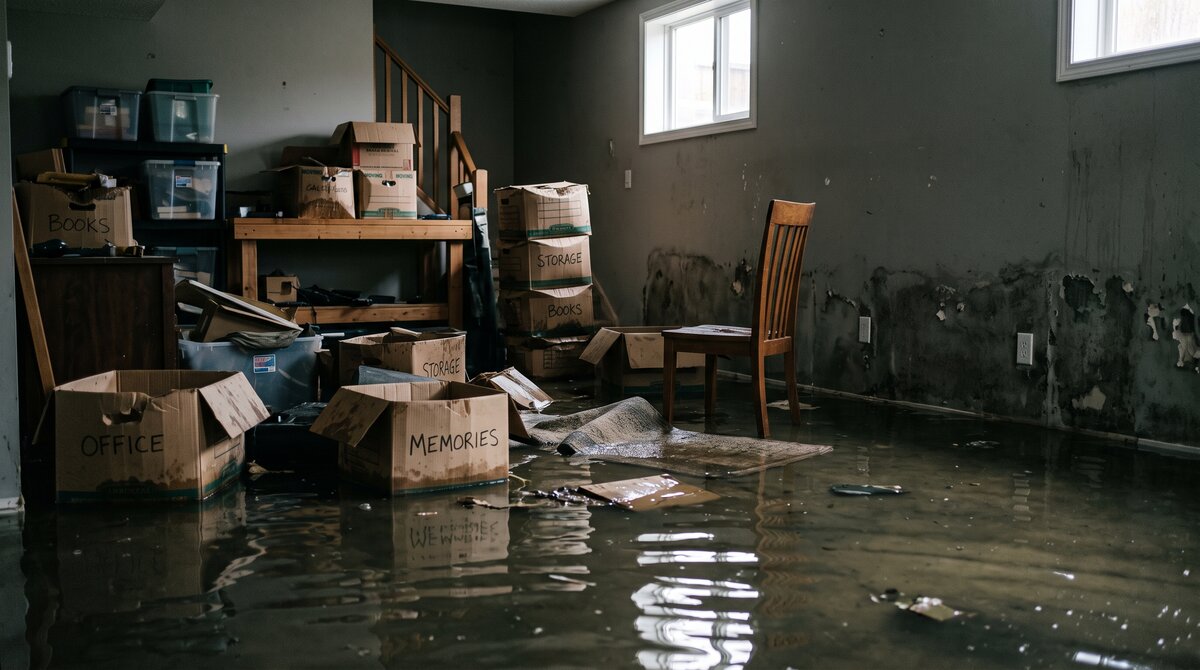
After a flood, burst pipe, or leak, the first question most Calgary homeowners ask is simple: how long until everything is dry? Water damage drying time is not a single number — it depends on how much water came in, what it touched, and how quickly the drying process started. With professional equipment, most homes reach a dry standard in three to five days, but saturated materials, contaminated water, or DIY air-drying can stretch that to weeks. This Calgary restoration guide explains what actually drives drying time, why getting it right matters, and how professionals make sure your home is truly dry — not just dry to the touch.
Table of Contents
Key Takeaways
- With professional equipment, most water-damaged homes reach a dry standard in three to five days.
- Water damage drying time depends on the water category, the materials affected, the volume of water, and indoor humidity and airflow.
- Materials can feel dry on the surface while still holding moisture inside — only a moisture meter confirms true dryness.
- Mould can begin growing within 24 to 48 hours, so fast drying is about preventing secondary damage, not just comfort.
- Professional drying with air movers, dehumidifiers, and moisture monitoring is far faster and more reliable than air-drying on your own.
How long water damage typically takes to dry
Most water-damaged homes take three to five days to dry when professional equipment is set up quickly. That timeline assumes clean water, a prompt start, and the right number of air movers and dehumidifiers for the space. Minor, localized incidents may dry in as little as two days, while major flooding or heavily saturated materials can take a week or more.
The clock matters because drying is a race against secondary damage. Every hour that water sits, it migrates further into walls, subfloors, and framing, and the risk of mould and structural problems climbs. Starting professional water and flood damage restoration within the first 24 hours is the single biggest factor in keeping drying time short.
What affects water damage drying time
Several factors determine how long your specific situation will take to dry. Understanding them helps you set realistic expectations and see why two seemingly similar floods can have very different timelines.
| Factor | Faster drying | Slower drying |
|---|---|---|
| Water category | Clean water (Category 1) | Grey or black water (Category 2-3) |
| Materials affected | Tile, sealed concrete, drywall | Hardwood, plaster, insulation |
| Volume and spread | Small, contained area | Large or multi-room flooding |
| Response time | Drying started within hours | Days before drying began |
Contaminated water adds time because affected porous materials often must be removed rather than dried. Dense materials like hardwood and plaster hold water longer, and Calgary’s variable humidity affects how fast moisture evaporates. The water’s category also drives the approach — if you are unsure what you are dealing with, our guide to Category 1, 2, and 3 water damage explains the differences and why they matter.
How the professional drying process works
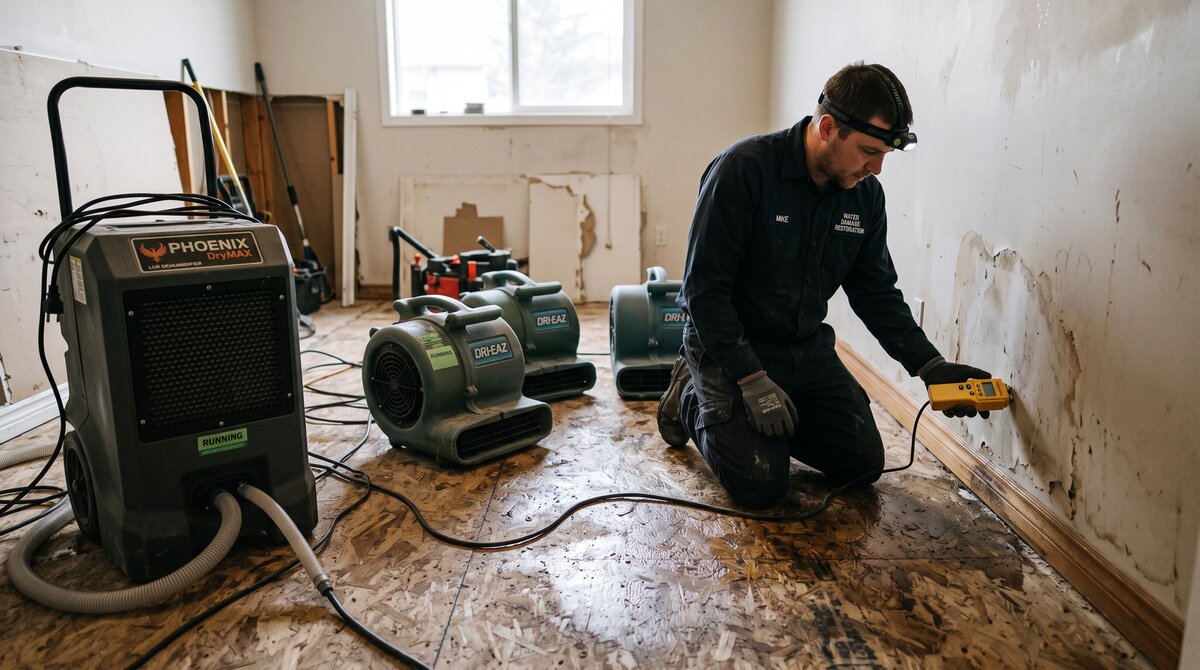
Professional drying is a controlled, measured process, not just running fans. It begins with water extraction to remove standing water, followed by removing unsalvageable materials. Technicians then position air movers to push air across wet surfaces and commercial dehumidifiers to pull moisture out of the air, creating a cycle that draws water out of materials.
Throughout, technicians use moisture meters and track readings daily, adjusting equipment until materials return to their normal dry value. This psychrometric approach — balancing temperature, humidity, and airflow — is what makes professional drying both fast and verifiable. It is also why hidden moisture gets caught early; our guide on signs of hidden water damage in your walls or floors shows what that trapped moisture can do if it is missed.
Why “dry to the touch” is not actually dry
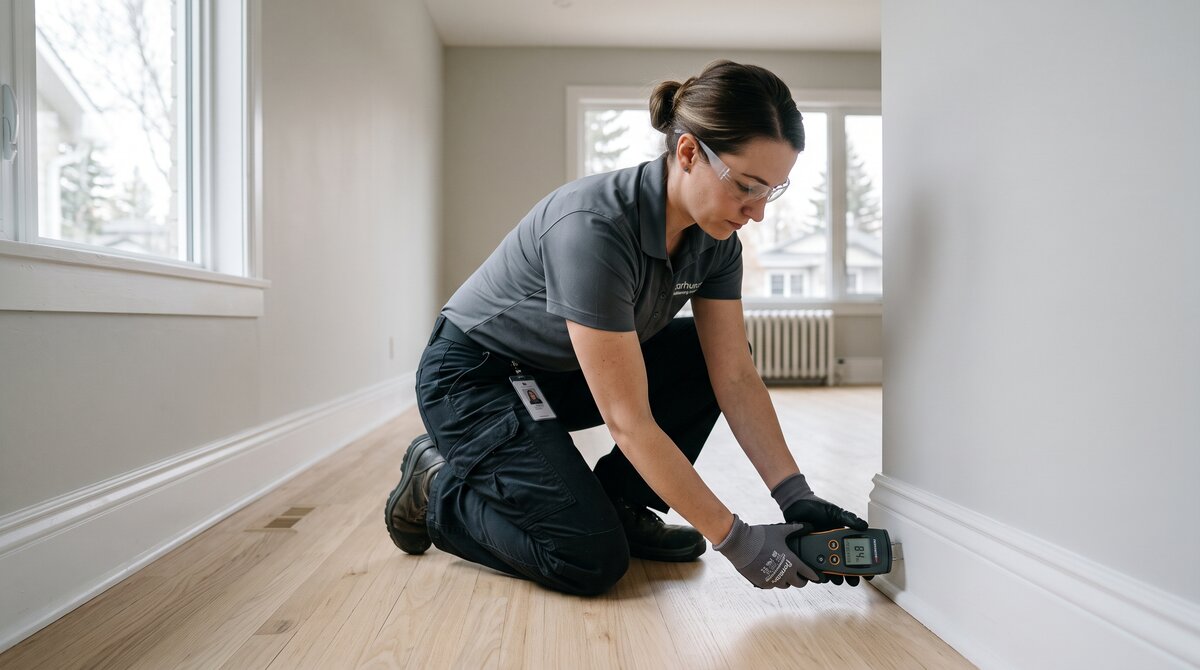
A surface that feels dry can still hold significant moisture inside. Drywall, wood, and subfloor can read damp on a moisture meter long after they feel dry to your hand, because evaporation cools and dries the outer layer first while the core stays saturated. Declaring victory too early is one of the most common — and costly — mistakes.
This is why professionals never rely on touch or appearance. They dry to a documented standard, comparing wet materials against an unaffected dry reference reading. Stopping when materials only feel dry leaves hidden moisture that can warp floors, delaminate materials, and feed mould weeks later, turning a quick fix into a major repair.
The risk of waiting or drying it yourself
Trying to dry significant water damage with household fans and open windows is slow and unreliable. Consumer fans move some air but cannot lower humidity the way commercial dehumidifiers do, so moisture often just relocates to another part of the home. Air-drying a flooded room can take weeks, and during that time the danger is not the water you can see — it is mould.
Mould can begin growing within 24 to 48 hours on damp materials, which means slow drying actively creates a second problem on top of the first. Waiting also lets water wick further into framing and subfloor. Our guide on preventing water damage in your basement covers the upstream causes, but once water is in, speed is everything — and that is where professional drying pays for itself.
How to speed up drying before help arrives
While you wait for a restoration crew, a few safe steps can limit the damage. If the water is clean and it is safe to do so, remove standing water with a wet/dry vacuum, lift area rugs off wet floors, and move furniture and valuables to a dry area. Open interior doors and closets to improve air circulation between rooms.
If you have a dehumidifier, run it, and use fans to keep air moving — but do not use your home’s HVAC system if the water may be contaminated, as it can spread moisture and pathogens through the ducts. Avoid walking on saturated flooring more than necessary, and photograph everything for your insurance claim. Most importantly, call a professional early; the sooner commercial drying begins, the shorter your total water damage drying time will be.
Why DKI Calgary is the right choice for water damage drying
DKI Calgary is part of North America’s largest disaster restoration network, serving Calgary and surrounding areas with 24/7 emergency water damage response. Drying is a science, and our certified technicians treat it that way — using truck-mounted extraction, commercial air movers and dehumidifiers, and daily moisture monitoring to bring your home back to a verified dry standard as quickly as possible.
Because we handle extraction, structural drying, mould prevention, contents restoration, and rebuild in-house, there are no gaps where moisture can hide between contractors. We document every reading for your insurer, respond fast to keep drying time short, and do not call a job finished until the numbers confirm it. Locally operating under new ownership and backed by the DKI brand, we know that in water damage, hours matter.
Conclusion
Water damage drying time usually runs three to five days with professional equipment, but the real answer depends on the water category, the materials, the volume, and how fast drying begins. The goal is not just a surface that feels dry — it is materials verified dry to standard before mould or structural damage can take hold. Because mould can start within 24 to 48 hours, every hour counts. Acting quickly and bringing in professional drying is the surest way to keep your water damage drying time short and your home protected.
Frequently Asked Questions
How long does water damage take to dry?
With professional extraction and drying equipment, most homes dry in three to five days. Minor incidents can dry in about two days, while major flooding, contaminated water, or dense materials like hardwood can take a week or more.
How long does it take wood to dry after water damage?
Hardwood and structural wood dry more slowly than drywall or tile and can take a week or longer, even with professional equipment. Technicians confirm dryness with a moisture meter rather than appearance, because wood often holds moisture inside after the surface feels dry.
Can water damage dry on its own?
Minor surface water may air-dry, but significant water damage rarely dries adequately on its own. Household fans cannot lower humidity enough, so moisture lingers in materials for weeks and allows mould to grow within 24 to 48 hours. Professional drying is far safer and faster.
How do I know if water damage is fully dry?
The only reliable way is a moisture meter reading compared to an unaffected dry reference value. Materials can feel dry to the touch while still saturated inside, so professionals dry to a documented standard rather than relying on how a surface looks or feels.
How soon should drying start after water damage?
As soon as possible — ideally within the first 24 hours. Fast response prevents water from migrating into walls and subfloor and keeps drying time short. Because mould can begin within 24 to 48 hours, starting professional drying quickly is the best way to avoid secondary damage.