
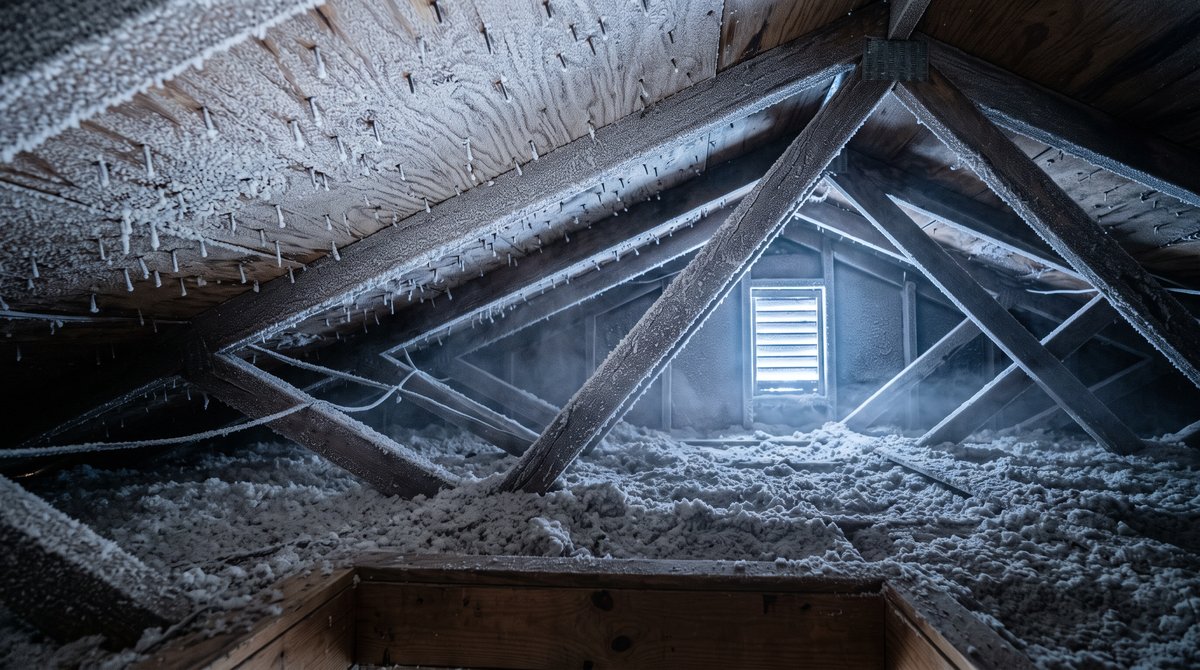
It has been minus 28 for a week. Then the chinook arrives, the temperature jumps twenty degrees overnight, and by morning there is water dripping from the light fixture in the upstairs hallway. The roof is fine. Nothing is leaking from outside. What you are seeing is attic rain in Calgary, and it is one of the most misunderstood forms of water damage in the city: frost that built up inside the attic during the cold snap, now melting all at once and coming down through the ceiling.
Attic rain gets treated as a roofing problem, an insurance problem or a nuisance, and it is really none of those. It is an indoor moisture problem that shows up as a water damage event, and the way you handle the first day decides whether it ends with a repainted ceiling or with wet insulation, mould on the roof sheathing and a claim dispute. This guide covers what attic rain is, why Calgary gets it worse than almost anywhere, what to do when it is dripping, what your insurance and warranty will and will not cover, and how to stop it happening every winter.
Table of Contents
- What attic rain is, and how it differs from a roof leak
- Why Calgary homes get attic rain
- Signs you have attic rain
- What to do when the ceiling is dripping
- The damage you do not see
- Insurance and new home warranty: what is actually covered
- Fixing the cause so it does not come back
- Why DKI Calgary is the right choice for attic rain damage
- Frequently Asked Questions
Key Takeaways
- Attic rain is frost that forms on the underside of the roof sheathing during a deep cold snap and melts into a downpour when a chinook warms the attic.
- The moisture comes from inside the house, not the weather: warm, humid indoor air leaking into the attic through gaps, fixtures and poorly vented bathroom fans.
- Wet attic insulation loses most of its insulating value and holds moisture against the ceiling drywall, where mould can start within 24 to 48 hours.
- Most home insurance policies treat attic rain as condensation or a maintenance issue and deny or limit the claim; homes under five years old may be covered by Alberta’s new home warranty instead.
- The lasting fix is upstairs, not on the roof: air sealing, lower indoor humidity during cold snaps and proper attic ventilation.
What attic rain is, and how it differs from a roof leak
Attic rain is condensation on a delay. During a sustained cold snap the underside of the roof deck drops well below freezing. Warm, moist air from the living space leaks up into the attic through every gap it can find, hits that cold surface, and freezes on contact. Day after day the frost builds, on the sheathing, on the nail tips, on the trusses. Nothing drips because nothing is liquid. Then the weather turns, the attic warms, and days of accumulated frost melt in a few hours. The water falls onto the insulation, soaks through, and comes out through the ceiling at the lowest points: light fixtures, the attic hatch, bathroom fans and the seams between drywall sheets.
Because it appears during a thaw, attic rain is regularly mistaken for an ice dam or a roof leak. They are different problems with different fixes, and telling them apart matters for the repair and the insurance claim.
| Problem | Where the water comes from | Where it shows up | Typical timing |
|---|---|---|---|
| Attic rain | Indoor humidity frozen on the roof deck, then melting | Middle of the house: hallway lights, hatch, bathroom fans, upper-floor ceilings | Rapid warm-up after a deep cold snap |
| Ice dam | Roof snowmelt backing up under shingles at the eaves | Ceilings and walls at the outside edges of the house | During thaws, with visible ice at the roof edge |
| Roof leak | Rain or melt entering through damaged roofing or flashing | Below the damaged spot, often near chimneys and vents | During or right after rain or melt |
If you are seeing water at the outside edges of the ceiling with ice hanging off the eaves, our guide to ice dams in Calgary is the one you want. Water in the middle of the house on a chinook morning is almost always attic rain.
Why Calgary homes get attic rain
Attic rain needs two things: a prolonged deep freeze to build the frost, and a fast warm-up to melt it. Calgary supplies both on a schedule. Cold snaps of minus 25 to minus 35 that last a week or more are normal here, and the chinook winds that end them can raise the temperature by 20 degrees or more in a single day. Cities with steady cold see the frost sublimate slowly; Calgary gets it back as a downpour.
The houses make it worse. Newer Calgary homes are built tight, which is good for heating bills and bad for attics: the moisture generated by cooking, showering, laundry and breathing has fewer ways out, so more of it finds the attic. Furnace humidifiers left at their fall setting push indoor humidity well past what a minus 30 attic can tolerate. Bathroom fans ducted into the attic instead of through the roof deliver warm, wet air straight to the frost line. And a poorly sealed attic hatch, pot lights and the gaps around plumbing stacks and top plates give the air a path up. During the extended cold snap in January 2024, attic rain calls came in across the city in the days after the temperature broke, and most of them traced back to those same few causes.
Signs you have attic rain
You can catch attic rain before it drips if you know where to look.
- Frost in the attic during a cold snap. Open the hatch with a flashlight; white frost on the underside of the sheathing and on the nail tips is the problem in progress.
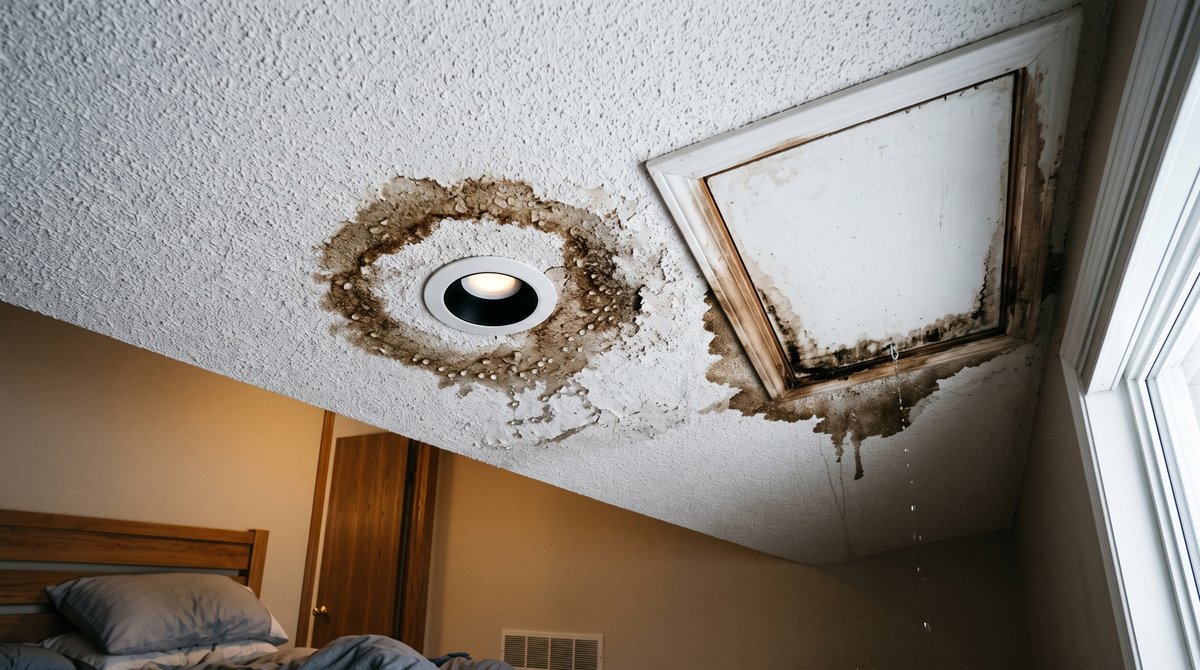
- Brown rings around light fixtures, the hatch or bathroom fans on upper-floor ceilings, especially ones that appear or grow after a thaw.
- Drips or wet spots on a warm morning when there has been no rain and no snow on the roof has moved.
- Insulation that looks matted, dark or compressed when viewed from the hatch, rather than fluffy and even.
- A musty smell upstairs or dark staining on the trusses and sheathing, which points to mould from previous seasons.
- Ceiling drywall that sags or feels soft near the drip points.
A stain that dries and stops growing is not a stain that has been dealt with. The insulation above it is still holding water, and it will do the same thing at the next thaw. Our post on signs of hidden water damage covers what to look for once the surface looks dry.
What to do when the ceiling is dripping
- Protect the room below. Move furniture, put down buckets and towels, and get electronics out from under the drip.
- Be careful with lights. Water coming through a light fixture is a shock hazard. Switch off the breaker for that circuit before touching the fixture or the wet ceiling around it.
- Relieve a sagging ceiling. If drywall is bulging with pooled water, place a bucket underneath and pierce the low point with a screwdriver to drain it in a controlled way. A ceiling that gives way on its own does far more damage.
- Cut the moisture at the source. Turn the furnace humidifier off, run bathroom and kitchen fans, and keep the attic hatch closed so you are not adding warm air to the melt.
- Photograph everything, including the attic if you can safely look in: frost, wet insulation and staining on the sheathing all matter for a claim.
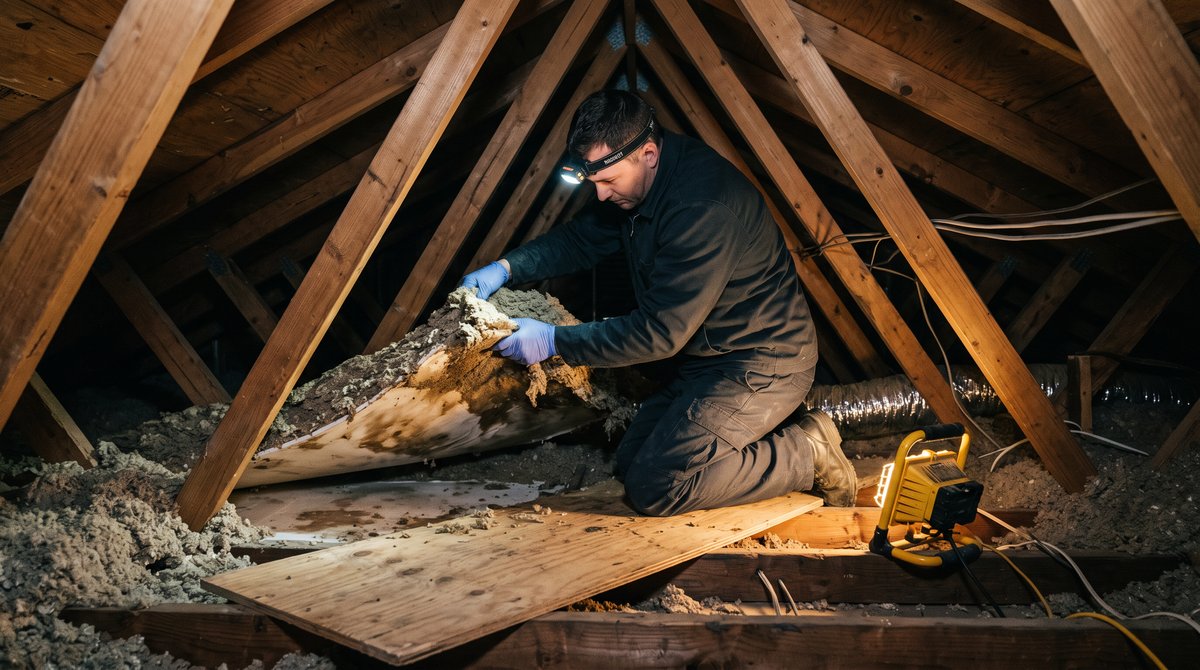
- Get the attic and ceiling dried professionally. The water you caught in the bucket is a fraction of what is sitting in the insulation. That has to come out or be dried before mould starts.
The damage you do not see
The drip through the light fixture is the visible part. The expensive part is above the ceiling. Blown-in or batt insulation that has absorbed a week of melted frost becomes heavy and compressed, and wet insulation loses most of its R-value, which means more heat escapes into the attic, which builds more frost the next cold snap. It also holds that moisture against the back of the ceiling drywall, and against wooden trusses and the roof sheathing.
Mould can begin growing on wet drywall paper and wood within 24 to 48 hours. In an attic that is being wetted every winter, the result is black staining across the underside of the sheathing, delaminating plywood or OSB, and a musty odour that reaches the bedrooms below. Left for enough seasons, sheathing rots to the point that a roof replacement has to include the deck, not just the shingles. Health Canada’s guidance on moisture and mould recommends professional remediation for growth larger than three square metres, and attic sheathing mould regularly exceeds that. Our post on whether mould is dangerous covers the health side.
Insurance and new home warranty: what is actually covered
This is where attic rain differs most from other water damage. Standard home insurance covers sudden and accidental water damage. Attic rain is caused by condensation from indoor humidity, and most insurers classify it as a maintenance or condensation issue rather than an insured peril, so claims are often denied outright or limited to a portion of the interior repair. Some policies will cover the ceiling damage while excluding the insulation and the attic; others exclude the event entirely. Read the exclusions, and talk to your broker before assuming.
Newer homes have a second avenue. Alberta’s mandatory new home warranty covers the building envelope for five years from the date coverage began, and attic rain caused by construction defects, such as bathroom fans vented into the attic, missing vapour barrier or inadequate ventilation, is routinely handled under that coverage. If your home is under five years old, file with the warranty provider before your insurer.
Whichever route applies, documentation decides the outcome. Photograph the frost and the wet insulation, keep the drying report with moisture readings, and get the cause identified in writing by whoever inspects the attic. A claim that shows a specific defect or a clearly documented event does better than one that just shows a stained ceiling. Our guide to whether water damage is covered by home insurance in Calgary explains how adjusters look at these claims.
Fixing the cause so it does not come back
Drying the attic fixes this winter. Stopping the moisture from getting up there fixes every winter after it. The work is in three parts, in this order.
- Lower indoor humidity when it is cold. Turn the furnace humidifier down or off during cold snaps, run bathroom fans for 20 minutes after every shower, use the range hood, and make sure the dryer vents outside. During a deep freeze, indoor humidity below 30 percent is the target; condensation on the inside of your windows is the sign it is too high.
- Seal the air leaks into the attic. Weatherstrip and insulate the hatch, seal around plumbing stacks, wiring penetrations and pot lights, and seal the bathroom fan housings to the ceiling. Redirect any fan that vents into the attic so it exhausts through the roof or wall.
- Restore attic ventilation. Clear soffit vents blocked by insulation, add baffles so air can move from the soffits to the roof vents, and confirm the exhaust venting matches the attic’s size. Replace insulation that has been wetted and compressed; it will not recover its R-value.
Roofing companies often get called first, and a good one will tell you the shingles are not the problem. The fix is air sealing, humidity control and ventilation, and it usually costs far less than the damage it prevents. The same heat loss that drives attic rain also drives ice dams and higher heating bills, so the work pays off three ways; our post on winter home damage in Calgary puts it in context.
Why DKI Calgary is the right choice for attic rain damage
Attic rain is a water damage event that most people do not recognize as one, and the cost of treating it as a cosmetic ceiling stain shows up the following winter as mould. DKI Calgary’s water and flood damage restoration crews handle attic rain every winter across Calgary, Airdrie, Cochrane, Chestermere and the surrounding communities: locating the wet insulation, removing or drying it, drying the ceiling structure to measured targets and documenting the cause for your insurer or warranty provider.
Where previous seasons have left mould on the sheathing, our mould remediation team contains and removes it before the attic is re-insulated. Technicians are IICRC certified, we respond 24 hours a day, and our residential restoration services carry the job from the first drip through to the repainted ceiling.
Conclusion
Attic rain in Calgary is the price of our weather and our tight, warm houses: a week of deep cold turns indoor humidity into frost on the roof deck, and the chinook that follows turns it into a downpour through the ceiling. It is not a roof leak, it is rarely covered the way a burst pipe would be, and the visible drip is the smallest part of the damage. Handle the emergency safely, get the attic and ceiling dried by people who measure moisture, and then fix the cause with humidity control, air sealing and ventilation. Do that once and the next chinook is just a warm day.
Frequently Asked Questions
What causes attic rain in Calgary?
Warm, humid air from the living space leaks into the attic during a deep cold snap and freezes on the underside of the roof deck as frost. When a chinook or a thaw warms the attic, days of frost melt at once, soak the insulation and drip through the ceiling. High indoor humidity, air leaks into the attic and bathroom fans vented into the attic are the usual sources.
Is attic rain covered by home insurance?
Usually not fully. Most insurers treat attic rain as condensation or a maintenance issue rather than sudden and accidental damage, so claims are often denied or limited to part of the interior repair. Check your policy’s exclusions and talk to your broker. Homes under five years old may be covered under Alberta’s new home warranty if a construction defect caused it.
How do I know if it is attic rain or a roof leak?
Attic rain shows up in the middle of the house, at light fixtures, the attic hatch and bathroom fans, on a warm morning after a cold snap when nothing has fallen from the sky. A roof leak appears during or right after rain or melt, usually near chimneys, vents or damaged shingles. Frost in the attic during the cold snap confirms attic rain.
Can I fix attic rain myself?
You can address the causes: turn the humidifier down, run fans, seal the attic hatch and obvious gaps, and make sure fans vent outside. Drying wet insulation and dealing with mould on the sheathing is a job for a restoration company, because the insulation has to be removed or dried to measured targets and mould has to be contained.
What humidity should my house be in winter to prevent attic rain?
Below 30 percent during deep cold snaps, and no higher than 35 to 40 percent in milder winter weather. Condensation on the inside of your windows means the humidity is too high for the outdoor temperature. Turn the furnace humidifier down as the temperature drops.
Will new shingles or a new roof stop attic rain?
No. Attic rain comes from inside the house, not through the roofing. New shingles do nothing about the humid air leaking into the attic. The fixes that work are air sealing, lower indoor humidity and proper attic ventilation, which cost far less than a roof.