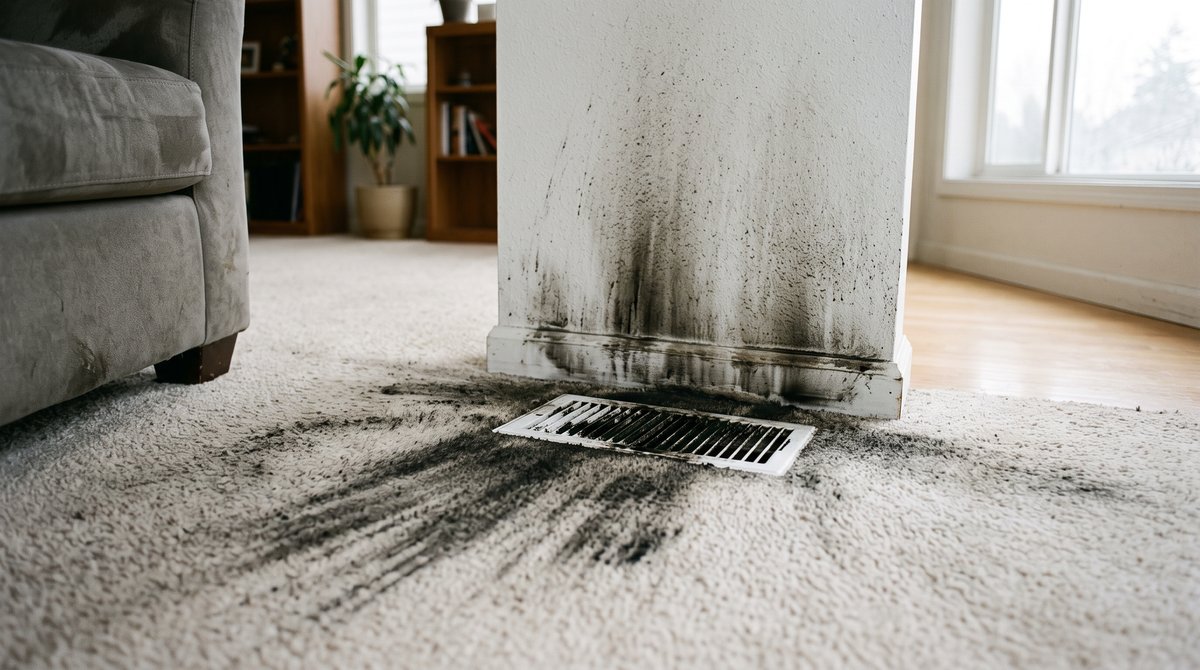
The first real cold night of October arrives, the thermostat calls for heat, and the furnace answers with a bang instead of a hum. Within minutes there is a burnt smell in the house, a grey film on the floor register, and black streaks fanning up the wall above it. That is a furnace puff back: a small explosion of unburned fuel inside the combustion chamber that blows soot through the ductwork and into every room the system feeds. It happens most often on the first start-up of the heating season, which in Calgary means right about now.
The soot looks like a cleaning job. It is not. Puff back residue is oily, acidic and fine enough to get into fabrics, electronics and the inside of the ducts, and wiping it spreads it. This guide explains what causes a puff back, what to do in the first hour, why the soot is worse than it looks, what your insurance will cover and how professional soot cleanup actually works.
Table of Contents
- What a furnace puff back is
- Why it happens on the first cold night of the season
- What to do in the first hour
- Why puff back soot is worse than it looks
- Does home insurance cover a furnace puff back?
- What professional soot cleanup involves
- Preventing the next one
- Why DKI Calgary is the right choice for soot and smoke damage
- Frequently Asked Questions
Key Takeaways
- A furnace puff back is a misfire in the combustion chamber that forces soot and smoke through the ducts, and it most often happens on the first start-up after months of sitting idle.
- Shut the furnace off, do not wipe anything, and treat the event as a carbon monoxide risk until a technician has checked the heat exchanger and venting.
- Puff back soot is oily and acidic; it stains permanently within days and spreads to every room the ductwork serves, including inside the ducts themselves.
- Standard Alberta home policies generally cover puff back damage as sudden and accidental, but not the furnace repair or losses tied to skipped maintenance.
- Professional cleanup means HEPA vacuuming, dry chemical sponges, duct cleaning, contents cleaning and deodorizing, in that order, before any painting.
What a furnace puff back is
A puff back happens when fuel accumulates in the combustion chamber before it ignites. Instead of lighting immediately, the gas or oil pools for a few seconds, and when ignition finally comes it burns the whole pocket at once. The result is a pressure wave that pushes smoke, soot and partially burned fuel back out of the chamber and into the air handler, where the blower sends it through the ducts and out of every register in the house.
Puff backs are best known on oil furnaces, which are rare in Calgary. Natural gas furnaces, which heat almost every home here, can do the same thing through delayed ignition: dirty or corroded burners, a weak igniter, a misaligned flame sensor, or a blocked vent let gas build before it lights. The soot volume is usually smaller than an oil puff back, but the mechanism and the damage are the same, and repeated small events can leave a home looking like it had a fire.
The signs are hard to miss once you know them:
- A bang, thump or boom from the furnace at start-up.
- A burnt or oily smell that arrives with the warm air.
- Grey or black streaks fanning out from floor or wall registers.
- Dark webbing in corners and along the ceiling, which is soot clinging to dust strands.
- A greasy film on countertops, glass and electronics.
Why it happens on the first cold night of the season
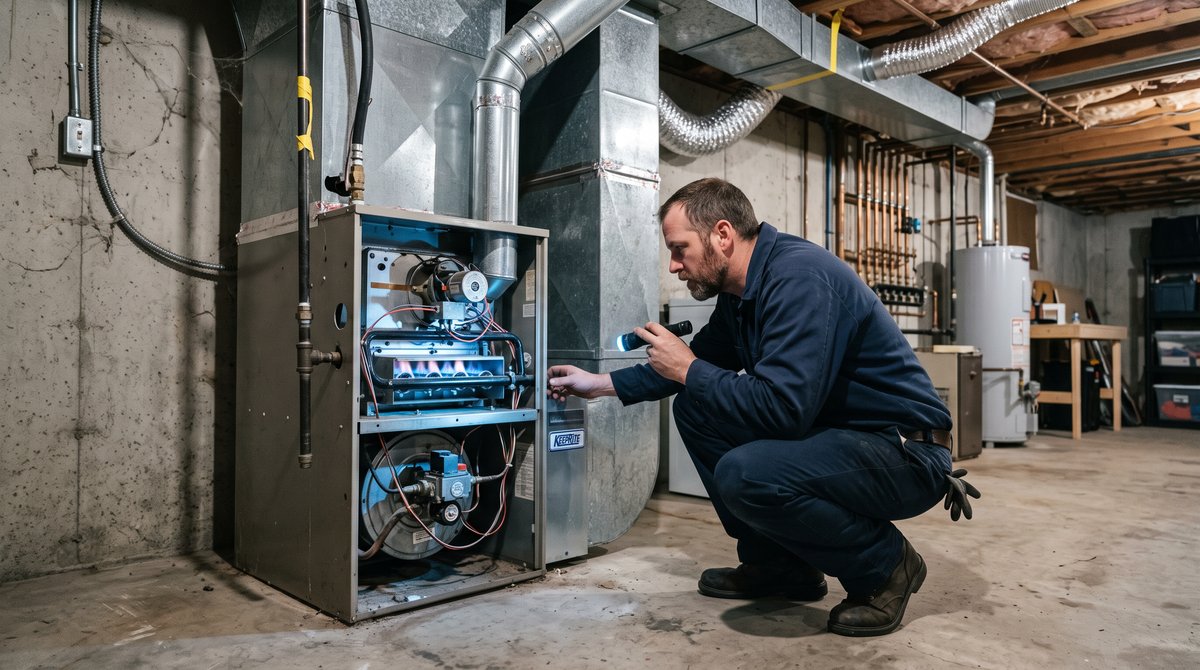
A furnace that has sat idle from April to October is at its most vulnerable on the night it comes back on. Dust settles on the burners and igniter over the summer. Basement humidity leaves a light film of corrosion on the burner ports and the heat exchanger. Insects and debris get into the intake or exhaust venting. Any one of those can delay ignition by a second or two, and a second or two is all a puff back needs.
Calgary adds its own pressure. The first cold snap often arrives suddenly, so the furnace goes from off to running hard within a day rather than easing in. Homes that skipped a pre-season service are running on whatever condition the burners were in when the heat went off in spring. That is why restoration companies here see a cluster of puff back calls every October and November, and again after the first deep freeze in January when systems that limped through the fall finally fail.
What to do in the first hour
- Shut the furnace off. Set the thermostat to off, then flip the furnace’s power switch, which is usually a light switch mounted on or beside the unit. Do not restart it until a technician has inspected it; a furnace that puffed back once will often do it again.
- Take carbon monoxide seriously. A misfire can mean a cracked heat exchanger or a blocked vent, both of which push combustion gases into the house. If your CO alarm sounds, or anyone feels headachy, dizzy or nauseated, get everyone outside and call 911. The City of Calgary’s guidance on carbon monoxide alarms covers where alarms belong and what to do when one goes off.
- Do not touch the soot. Wiping oily soot grinds it into paint, fabric and grout and turns a cleanable surface into a stained one. Fingerprints on a sooty wall are permanent. Leave it.
- Ventilate if the weather allows. Open windows to clear the odour, but do not run the furnace fan, ceiling fans or portable air cleaners; moving air spreads the residue further.
- Photograph everything. Registers, walls, ceilings, contents and the furnace itself, before anything is moved or cleaned.
- Make three calls. An HVAC technician to diagnose and repair the furnace, your insurer to open a claim, and a restoration company to handle the soot. Each is a separate job; the furnace company will not clean your house and the cleaner will not fix your furnace.
Why puff back soot is worse than it looks
Soot from a furnace misfire is not the dry, powdery ash of a wood fire. It is a mix of carbon and unburned fuel, which makes it oily, and it carries acids that keep working on surfaces after the event. Left for a few days it etches into metals, yellows plastics and sets into fabric. And because it arrived through the ductwork, it is inside the ducts too, ready to come out again the first time the fan runs.
| Surface | What the soot does | How it is cleaned |
|---|---|---|
| Painted walls and ceilings | Oily film bonds to the paint; wiping smears it | Dry chemical sponge first, then degreaser, then sealing and repainting if stained |
| Carpet and upholstery | Particles sink into fibres and hold odour | HEPA vacuuming, then hot water extraction or professional fabric cleaning |
| Ductwork | Lines the interior and re-releases soot when the fan runs | Mechanical duct cleaning with negative pressure |
| Electronics and appliances | Acidic residue corrodes circuit boards over weeks | Specialized contents cleaning, often off-site |
| Clothing, bedding and soft goods | Absorb odour and staining | Ozone or hydroxyl treatment plus laundering; some items are replaced |
The health side matters too. Soot particles are fine enough to reach deep into the lungs, and the residue keeps releasing odour and particulate for as long as it sits. Children, older adults and anyone with asthma should stay out of heavily affected rooms until they are cleaned. Our post on smoke smell removal after a house fire explains why odour lingers and how it is treated.
Does home insurance cover a furnace puff back?
In most cases, yes. A puff back is a sudden and accidental event, and standard Alberta home policies treat the resulting soot and smoke damage the way they treat any smoke loss: the cleaning, the repainting, the duct cleaning and the damaged contents are typically covered, less your deductible. The Insurance Bureau of Canada’s guide to how home insurance works is a useful starting point for what a standard policy includes.
What is generally not covered is the furnace itself. Repairing the burner, replacing the igniter or fixing a cracked heat exchanger is a mechanical breakdown, which sits outside a standard policy. Insurers may also push back on a claim where the furnace had clearly not been serviced in years, or where a previous puff back had gone unreported. Document the event thoroughly, keep the HVAC technician’s report, and get the cleaning scope in writing from the restoration company; those three documents are what an adjuster wants to see.
What professional soot cleanup involves
Soot cleanup follows the same discipline as fire restoration, just at a smaller scale. The order matters, because doing the steps out of sequence redeposits soot on surfaces that were already clean.
- Assessment. Every room fed by the ducts is checked, not just the ones that look dirty; soot travels farther than the eye can see.
- HEPA vacuuming. Loose particulate is removed from all surfaces before anything is touched with a wet product.
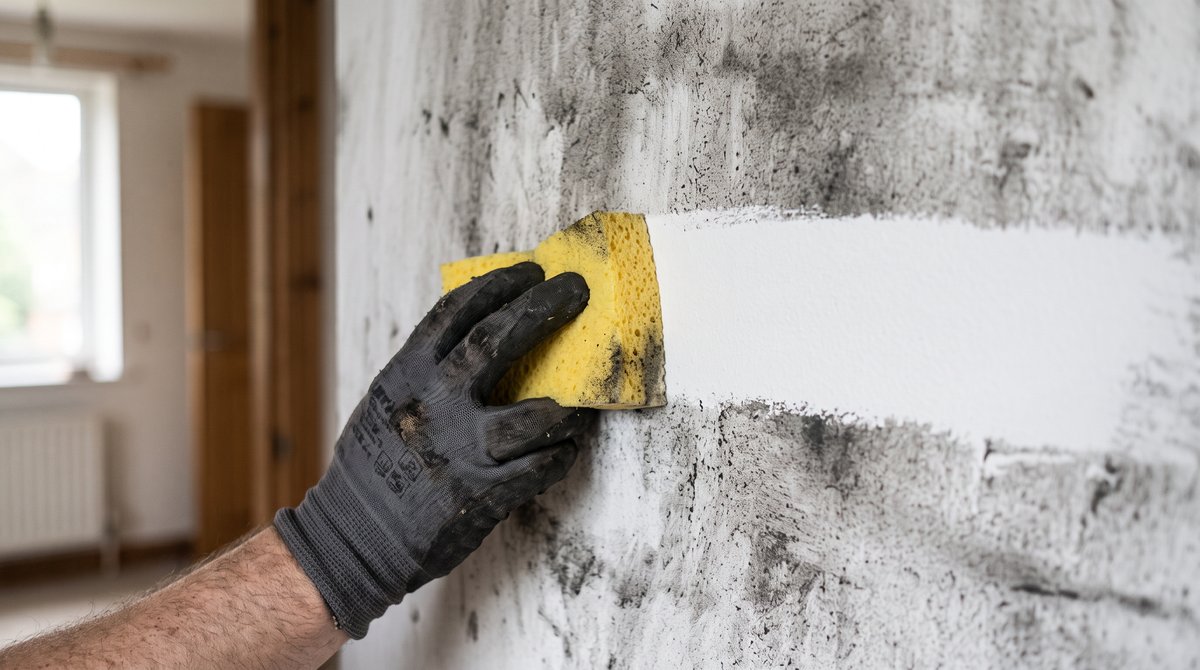
- Dry sponge cleaning. Chemical sponges lift oily soot from walls and ceilings without smearing, working top to bottom.
- Wet cleaning and degreasing of hard surfaces, followed by sealing and repainting where staining has set.
- Duct cleaning under negative pressure, and replacement of the furnace filter, so the system does not reload the house.
- Contents cleaning. Furniture, electronics, clothing and soft goods are cleaned by category, often off-site, through our contents restoration process.
- Deodorization. Hydroxyl or ozone treatment neutralizes the odour that survives cleaning, rather than covering it.
For a sense of how the larger version of this process runs, see what to expect during fire damage restoration.
Preventing the next one
Almost every puff back traces back to a furnace that was not serviced before the heating season. A pre-season inspection by a licensed technician, ideally in September, cleans the burners, checks the igniter and flame sensor, inspects the heat exchanger and confirms the venting is clear. That single visit removes most of the conditions that let gas pool before ignition.
- Book the furnace service before the first cold snap, not after.
- Change the filter every one to three months through the winter.
- Keep storage, laundry and chemicals well clear of the furnace and its air intake.
- Treat any bang at start-up as a fault to be diagnosed, not a quirk to live with.
- Install carbon monoxide alarms outside every sleeping area and test them monthly; Alberta’s building code requires them in new homes with fuel-burning appliances, and they are strongly recommended in every existing one.
Our guide to winter home damage in Calgary covers the other pre-season checks that pay for themselves.
Why DKI Calgary is the right choice for soot and smoke damage
Soot cleanup is fire restoration work, and DKI Calgary’s fire and smoke damage restoration team does it to the same standard whether the source was a house fire or a furnace misfire. We respond 24/7 across Calgary, Airdrie, Cochrane, Chestermere and the surrounding communities, assess every room the ducts reach, and clean in the order that keeps soot from spreading.
Our technicians are IICRC certified in fire and smoke restoration, contents are handled through our own contents restoration facility, and we document the scope for your adjuster from the first visit so the claim and the cleanup move together. For homeowners, our residential services cover everything from the initial assessment to the final coat of paint.
Conclusion
A furnace puff back is a seasonal problem with a predictable cause: a furnace that sat idle all summer, started hard on the first cold night and lit a pocket of fuel a second too late. The bang is over in an instant; the soot is not. It is oily, acidic and everywhere the ducts go, and wiping it makes it permanent. Shut the furnace down, respect the carbon monoxide risk, leave the residue alone, photograph the damage and get an HVAC technician and a restoration crew in. Insurance will usually cover the cleanup, and a pre-season furnace service next September means you will not need it again.
Frequently Asked Questions
What causes a furnace puff back?
Delayed ignition. Fuel builds up in the combustion chamber before it lights, usually because of dirty or corroded burners, a weak igniter, a faulty flame sensor or a blocked vent, and when it finally ignites the pressure wave pushes soot back through the system. It is most common on the first start-up after the furnace has sat unused through the summer.
Can a gas furnace puff back, or only oil?
Both. Oil furnaces are known for large, sooty puff backs, but natural gas furnaces, which heat almost every Calgary home, can misfire through delayed ignition and produce the same soot and smoke through the ducts. The volume is usually smaller, but repeated events add up.
Is a furnace puff back dangerous?
It can be. The misfire itself may point to a cracked heat exchanger or blocked venting, both of which can release carbon monoxide into the home. Shut the furnace off, get out if a CO alarm sounds or anyone feels unwell, and do not restart the system until a technician has inspected it.
Can I clean up puff back soot myself?
Not without making it worse. Puff back soot is oily and smears into paint and fabric when wiped, and it lines the ductwork where it will keep coming back. Professional cleanup uses HEPA vacuuming, dry chemical sponges and duct cleaning in a specific order. Leave the surfaces alone and photograph them for your claim.
Does insurance cover furnace puff back damage?
Usually yes for the soot and smoke damage, including cleaning, repainting, duct cleaning and affected contents, because it is a sudden and accidental event. The furnace repair itself is generally not covered, and claims can be questioned if the furnace was obviously neglected. Keep the technician’s report and the cleaning scope for the adjuster.
How do I prevent a furnace puff back?
Have the furnace serviced by a licensed technician before every heating season, change the filter regularly, keep the area around the furnace clear, and treat any bang at start-up as a fault to be diagnosed. Working carbon monoxide alarms outside every sleeping area are the backstop.