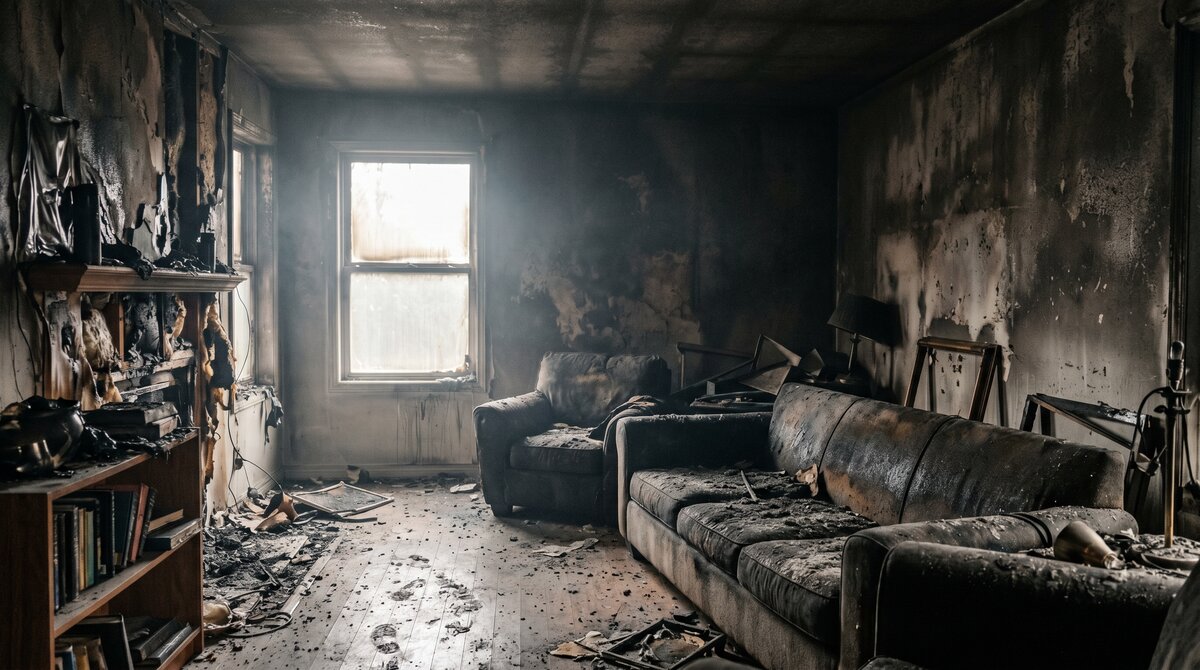
Even after the flames are out and the visible damage is repaired, one problem lingers longer than any other: the smell. Smoke smell removal is the hardest part of recovering from a house fire because smoke odour embeds itself in drywall, insulation, fabrics, and your HVAC system — far beyond what an open window or air freshener can fix. For Calgary homeowners, lingering smoke odour is not just unpleasant; it is a sign that microscopic soot and toxins are still present. This 2026 guide explains why smoke smell sticks around, what actually removes it, and when to call a professional restoration team.
Table of Contents
Key Takeaways
- Smoke smell lingers because soot particles and odour-causing compounds penetrate porous materials and your HVAC system, not just surfaces.
- Air fresheners and surface cleaning only mask odour — true smoke smell removal requires source removal, deep cleaning, and air treatment.
- Professionals use thermal fogging, hydroxyl or ozone generators, HEPA air scrubbing, and sealing to neutralize odour at the molecular level.
- Soft, porous items like carpet, insulation, and some drywall often must be replaced rather than cleaned.
- Lingering soot is a health hazard, so addressing smoke odour quickly protects both your home and your family’s air quality.
Why smoke smell lingers after a fire
Smoke smell lingers because a fire releases billions of microscopic soot particles and volatile compounds that travel with hot air into every porous surface in your home. As the air cools, those particles settle deep inside drywall, insulation, carpet, upholstery, wood, and the ductwork of your HVAC system. The odour you smell weeks later is those embedded particles continuing to off-gas.
This is why the smell often seems to “come back” after you have cleaned. Wiping down visible surfaces removes only a fraction of the soot; the rest is hidden inside materials and circulated every time your furnace or air conditioning runs. Calgary’s dry climate and sealed, energy-efficient homes can actually concentrate trapped odour, making professional fire and smoke damage restoration essential for a complete fix.
DIY smoke smell removal vs. professional restoration
For very minor incidents — a small stovetop flare-up with light, localized smoke — DIY methods can help. Ventilating thoroughly, washing hard surfaces with a degreasing cleaner, laundering fabrics, placing bowls of activated charcoal or baking soda, and replacing HVAC filters will reduce light odour. The key word is light: these methods address surface odour only.
After a structural fire, DIY is not enough and can even be hazardous. Disturbing soot without proper protection spreads it further and exposes you to toxins. Professional restoration removes the odour at its source, treats the air, and decontaminates your HVAC system. Knowing the difference matters — our guide on how to choose a restoration company in Calgary walks through what to look for, and our overview of what to expect during fire damage restoration shows where odour removal fits in the bigger process.
How professionals remove smoke odour
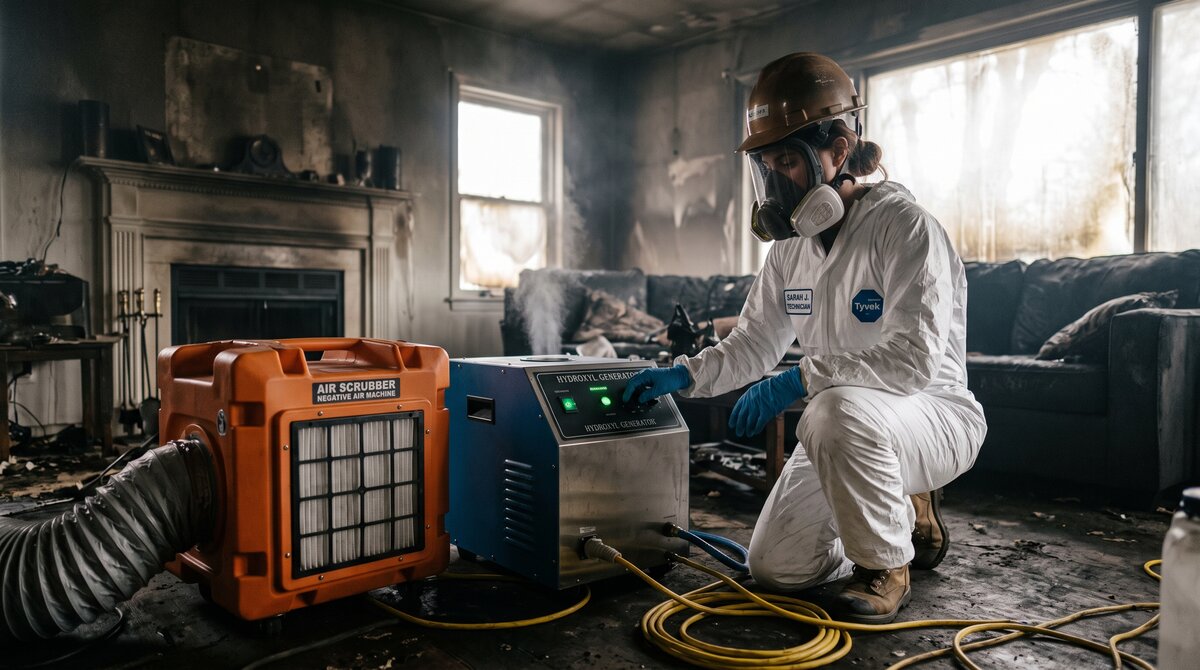
Professional smoke smell removal is a multi-step process that neutralizes odour rather than masking it. After removing unsalvageable materials, technicians deep-clean every remaining surface, then deploy specialized air-treatment equipment to reach the odour molecules cleaning cannot.
| Method | What it does | Best for |
|---|---|---|
| HEPA air scrubbing | Filters airborne soot and particles from the room | Active particle and dust control |
| Thermal fogging | Recreates smoke penetration to neutralize odour in the same spaces | Deeply embedded odour in porous materials |
| Hydroxyl / ozone | Chemically breaks down odour molecules in the air | Whole-room and whole-home deodorizing |
| Sealing | Locks in any residual odour on framing before rebuild | Studs, subfloor, and structural surfaces |
Ozone treatment is powerful but requires an unoccupied space, while hydroxyl generators can run safely around people. The right combination depends on the severity and the materials involved, which is why a professional assessment comes first. Soot is also acidic and corrodes surfaces over time, so prompt cleaning protects your belongings as well as your air.
What can be saved and what must be replaced
Hard, non-porous items — metal, glass, sealed countertops, solid wood furniture — can usually be cleaned and deodorized successfully. Porous and soft materials are far harder to salvage because odour penetrates them completely. Carpet and underlay, insulation, mattresses, and heavily soiled drywall often must be removed and replaced rather than treated.
Personal belongings, electronics, documents, and textiles frequently fall in between and can be saved with specialized cleaning. Our contents restoration services use ultrasonic cleaning, ozone chambers, and specialized techniques to recover items that look like total losses, and our broader residential restoration services coordinate cleaning, odour removal, and rebuild under one roof.
Health risks of lingering smoke and soot
Lingering smoke odour is more than a nuisance — it signals that fine soot particles and combustion byproducts are still in your air. These particles are small enough to be inhaled deep into the lungs and can irritate the eyes, nose, throat, and airways. People with asthma, allergies, or respiratory conditions, along with children and seniors, are especially vulnerable.
Soot can also contain harmful compounds depending on what burned, including synthetic materials and plastics common in modern homes. This is why proper protective equipment and containment matter during cleanup, and why a “clean smell” is a meaningful health milestone, not just a comfort one. For general guidance on smoke exposure, Alberta Health Services and the Government of Canada’s pages on smoke and indoor air quality are reliable references.
How to limit odour spread before help arrives
While you wait for professional help, a few steps can keep odour from spreading further. If it is safe to enter, turn off your HVAC system so soot is not circulated through the ducts, and avoid running fans that push particles into clean areas. Open windows for cross-ventilation only if outdoor air quality is good and weather permits.
Do not touch or wipe soot-covered surfaces with bare hands, and avoid using your home’s fabrics until they are cleaned. Resist the urge to repaint or seal over odour, which traps it rather than removing it. Document everything with photos for your insurance claim, and let the restoration team handle the rest — moving too fast on your own can lock odour in and increase the final cost.
Why DKI Calgary is the right choice for smoke smell removal
DKI Calgary is part of North America’s largest disaster restoration network, serving Calgary and surrounding communities with certified fire and smoke damage specialists available 24/7. Smoke odour removal is a core part of what we do — we do not just clean surfaces, we eliminate odour at the molecular level using thermal fogging, hydroxyl and ozone treatment, HEPA air scrubbing, and full HVAC decontamination.
Because we handle the entire process in-house — emergency response, soot cleanup, contents restoration, odour neutralization, and rebuild — your home is treated as one continuous project rather than handed between contractors. Our technicians follow industry restoration standards, document everything for your insurer, and stand behind the result. Locally operating under new ownership and backed by the DKI brand, we treat a smoke-free home as the finish line, not a bonus.

Conclusion
Smoke smell removal after a house fire is about reaching the odour you cannot see — the embedded soot in your materials and ductwork that surface cleaning and air fresheners never touch. Light incidents may respond to thorough ventilation and cleaning, but a real fire calls for professional source removal, deep cleaning, and air treatment. Acting quickly protects your belongings, your air quality, and your family’s health. When the smell will not leave, that lingering odour is your home telling you the job is not finished — and effective smoke smell removal is how you finish it.
Frequently Asked Questions
How do you get smoke smell out of a house after a fire?
Effective smoke smell removal requires removing unsalvageable porous materials, deep-cleaning all remaining surfaces, decontaminating the HVAC system, and treating the air with thermal fogging, hydroxyl or ozone generators, and HEPA scrubbing. Surface cleaning alone leaves embedded odour behind.
Does smoke smell ever go away on its own?
Light smoke odour can fade over weeks with thorough ventilation, but odour from a structural fire rarely disappears on its own. The soot embedded in drywall, insulation, and ductwork keeps off-gassing until it is physically removed and the air is treated.
Can I remove smoke smell myself?
For minor smoke you can ventilate, wash hard surfaces, launder fabrics, and replace HVAC filters. After a real fire, DIY is unsafe and ineffective — disturbing soot spreads toxins and rarely removes deep odour. Professional restoration is the reliable solution.
Does ozone treatment really remove smoke odour?
Yes. Ozone generators break down odour molecules in the air and are highly effective for whole-home deodorizing, but the space must be unoccupied during treatment. Hydroxyl generators offer a safer alternative that can run while people are present.
How long does professional smoke smell removal take?
It depends on the severity, but most deodorizing projects take several days to a couple of weeks, including material removal, cleaning, and multiple air-treatment cycles. A professional assessment gives you an accurate timeline for your specific home.