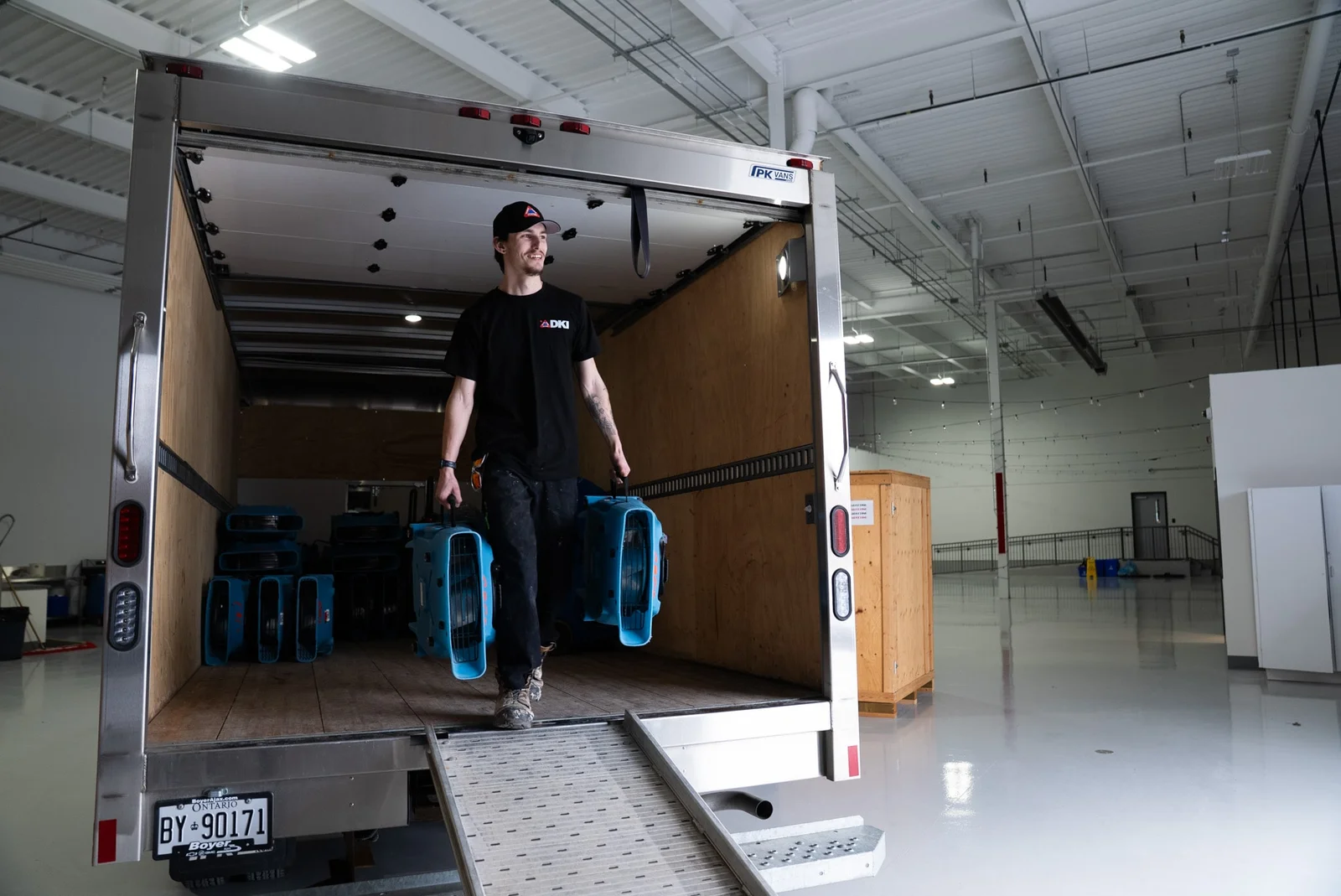
When disaster strikes your Calgary home — whether it is a burst pipe flooding the basement, hail tearing through your roof, or a kitchen fire leaving smoke damage in every room — one of the most important decisions you will make is choosing the right restoration company in Calgary to handle the recovery. The company you hire determines how quickly your home is restored, how much of your property can be saved, how smoothly your insurance claim is processed, and ultimately how much stress you endure during an already difficult time.
Unfortunately, the restoration industry attracts its share of unqualified operators — especially after major storms and disasters when demand surges. This guide gives Calgary homeowners the knowledge to evaluate restoration companies confidently, spot red flags before signing a contract, and understand what separates a qualified, full-service restorer from a company that may leave you with incomplete work and a disputed insurance claim.
Table of Contents
- Why Your Choice of Restoration Company Matters
- Essential Certifications and Qualifications
- 10 Questions to Ask Before Hiring a Restoration Company
- Red Flags and Storm Chasers: What to Watch For
- Insurance-Preferred vs. Independent Contractors
- Why Full-Service Restoration Matters
- Restoration Company Comparison Checklist
- Frequently Asked Questions
- Work with DKI Calgary
Why Your Choice of Restoration Company in Calgary Matters
Property damage restoration is not the same as a typical home renovation. It involves hazardous materials handling, contaminated water categories, insurance documentation protocols, and time-sensitive mitigation that prevents secondary damage from compounding costs. Hiring the wrong company can result in incomplete drying that leads to hidden mould growth, improper soot cleaning that permanently damages surfaces, inadequate documentation that causes your insurance claim to be underpaid or denied, and substandard repairs that fail within months.
The stakes are high, and the decision often needs to be made quickly — sometimes within hours of a disaster. Knowing what to look for in advance means you can act decisively when it counts most.
Essential Certifications and Qualifications to Look For
Not all restoration companies are created equal. Here are the credentials that separate qualified professionals from general contractors who happen to offer cleanup services.
IICRC Certification
The Institute of Inspection, Cleaning and Restoration Certification is the industry standard for restoration professionals across North America. IICRC-certified firms employ technicians who have completed rigorous training in water damage restoration, fire and smoke restoration, mould remediation, and applied structural drying. A company without IICRC certification is operating without the industry’s baseline professional standard.
Valid Calgary Business Licence
Any company performing restoration work in Calgary must hold a valid City of Calgary business licence. This is your first line of verification that the company is legitimate, accountable, and subject to local regulations. After major storms, out-of-province companies often arrive without local licensing — a significant risk if disputes arise.
Proper Insurance Coverage
A legitimate restoration company carries comprehensive general liability insurance (minimum $2 million is standard in Alberta) and workers’ compensation coverage. Without this, you could be held liable if a worker is injured on your property or if the restoration work causes additional damage.
Specialized Certifications
Depending on your situation, look for additional credentials: asbestos abatement certification for older Calgary homes, FSRT (Fire and Smoke Restoration Technician) designation, WRT (Water Restoration Technician) certification, and AMRT (Applied Microbial Remediation Technician) for mould work.
10 Questions to Ask Before Hiring a Restoration Company in Calgary

Before signing any contract or authorizing work, ask these questions. A qualified company will answer all of them confidently and without hesitation.
- Are you IICRC-certified? — Ask for the firm’s certification number, not just the claim
- Do you hold a valid Calgary business licence? — Request the licence number and verify it
- Can you provide proof of liability insurance and workers’ compensation? — Ask for a Certificate of Insurance
- Do you handle both mitigation and reconstruction? — Full-service companies eliminate gaps between cleanup and rebuild
- How quickly can you respond? — True 24/7 availability with a specific response time commitment matters
- Do you work directly with insurance companies? — Companies experienced in insurance restoration understand documentation requirements and pricing standards
- Can you provide local references from Calgary homeowners? — Recent, verifiable references from your area
- What is your documentation process? — Moisture mapping, photographic evidence, and detailed reports protect your insurance claim
- Do you offer contents restoration? — Companies with in-house contents cleaning and storage capabilities can save thousands in replacement costs
- Who will be my point of contact throughout the project? — A dedicated Project Manager ensures clear communication and accountability
Red Flags and Storm Chasers: What Calgary Homeowners Should Watch For
After major weather events in Calgary — particularly hailstorms, which can generate over 100,000 insurance claims in a single event — unqualified contractors flood the market looking for quick revenue. Here is how to spot them.
Warning Signs of an Unqualified Contractor
- Door-to-door solicitation immediately after a storm — Reputable restoration companies do not canvass neighbourhoods. They receive referrals from insurers, property managers, and past clients
- Pressure to sign immediately — Any company that pressures you to sign a contract on the spot, claiming “limited availability” or “prices going up tomorrow,” is using high-pressure sales tactics
- No local office or business licence — Out-of-town operators who set up temporary offices after storms and disappear once the work is done leave homeowners with no recourse if problems emerge
- Unusually low estimates — Lowball bids often mean the company plans to cut corners, use unqualified labour, or submit supplemental charges later
- Requesting large upfront deposits — Insurance restoration work is typically billed directly to the insurer. A company asking for thousands of dollars upfront before starting work is a red flag
- No written scope of work — A professional restoration company provides a detailed written scope before beginning, outlining exactly what will be done, the timeline, and the cost
- Cannot provide IICRC certification — If a company cannot produce their IICRC firm certification when asked, move on
Insurance-Preferred vs. Independent Restoration Contractors
When you file an insurance claim, your insurer may recommend a restoration company from their “preferred vendor” list. It is important to understand what this means — and your rights as a homeowner.
Your Right to Choose
Alberta homeowners have the legal right to choose their own restoration contractor. You are never obligated to use the company your insurer suggests. While insurance-preferred vendors may offer convenience, they operate under agreements with the insurer that can sometimes prioritize cost control over comprehensive restoration.
What to Consider
The best approach is choosing a restoration company that works regularly with insurance companies — understanding their documentation requirements and pricing frameworks — while remaining accountable to you, the homeowner, rather than the insurer. Companies like DKI Calgary work directly with all major Alberta insurance providers while maintaining their primary obligation to the property owner.
Why Full-Service Restoration Matters for Calgary Properties
Property damage rarely involves just one issue. A hailstorm damages the roof, which lets water in, which soaks the attic insulation, which creates mould conditions. A fire chars the kitchen, but smoke travels through the entire HVAC system, and firefighting water floods the basement. Hiring separate companies for each problem — a roofer for the roof, a plumber for the water, a cleaning company for the smoke — creates gaps, miscommunication, and delays.
A full-service restoration company handles every phase under one roof: emergency response and securing, water extraction and structural drying, fire, smoke, and soot cleanup, mould remediation, contents restoration, demolition and reconstruction, and insurance documentation and coordination.
This integrated approach means one point of contact, one timeline, one insurance submission, and no gaps between mitigation and repair. For Calgary homeowners dealing with the stress of property damage, this simplification is invaluable.
Restoration Company Comparison Checklist
Use this checklist when evaluating any Calgary restoration company. A qualified, professional restorer should meet every criterion on this list.
| Criteria | What to Verify | Why It Matters |
|---|---|---|
| IICRC Firm Certification | Ask for certification number; verify on iicrc.org | Industry-standard training and accountability |
| Calgary Business Licence | Request licence number; verify with City of Calgary | Legal accountability and local presence |
| Liability Insurance ($2M+) | Request Certificate of Insurance | Protects you from liability during restoration |
| Workers’ Compensation | Request WCB clearance letter | Protects you if a worker is injured on your property |
| 24/7 Emergency Response | Call after hours to confirm real availability | Damage worsens by the hour — response time matters |
| Full-Service (Mitigation + Rebuild) | Ask if they handle both cleanup and construction | Eliminates gaps and miscommunication between phases |
| Insurance Experience | Ask how many insurance claims they process annually | Experienced companies produce better documentation and smoother claims |
| Contents Restoration | Ask if they have in-house contents cleaning | Saves thousands vs. full replacement on your claim |
| Dedicated Project Manager | Ask who your single point of contact will be | Ensures accountability and clear communication |
| Local References | Ask for 3+ recent Calgary references | Verifiable track record in your community |
Frequently Asked Questions
Do I have to use the restoration company my insurance recommends?
No. Alberta homeowners have the right to choose their own restoration contractor. Your insurer may suggest a preferred vendor, but you are never obligated to use them. Choose a company that prioritizes your interests while also understanding insurance documentation and pricing standards.
How quickly should a restoration company respond?
A true 24/7 restoration company should be able to have a crew on site within one to two hours for emergency situations in Calgary. Water damage, fire damage, and storm damage all worsen rapidly — every hour of delay increases the scope and cost of restoration.
What is the difference between mitigation and restoration?
Mitigation is the emergency phase — stopping the damage from getting worse. This includes water extraction, board-up, tarping, and drying. Restoration is the repair and reconstruction phase — rebuilding the property to its pre-loss condition. The best companies handle both seamlessly under one contract.
Should I get multiple quotes before hiring a restoration company?
For emergency mitigation, time is more critical than comparison shopping — water and smoke damage compound by the hour. For the reconstruction phase, getting a second opinion is reasonable. However, the most important factor is choosing a company with proper certifications, insurance experience, and full-service capabilities rather than simply the lowest price.
What does IICRC certification actually mean?
IICRC stands for the Institute of Inspection, Cleaning and Restoration Certification. Certified firms employ technicians who have completed standardized training in damage assessment, proper drying science, contamination protocols, and industry best practices. It is the recognized professional standard across North America for restoration work.
How do I verify a restoration company’s credentials?
Ask for their IICRC firm certification number and verify it at iicrc.org. Request their Calgary business licence number and check it through the City of Calgary’s business licence search. Ask for a Certificate of Insurance showing current liability coverage and workers’ compensation. Any legitimate company will provide these without hesitation.
Why Calgary Property Owners Choose DKI Calgary
DKI Calgary — formerly Rocky Cross Construction, part of the DKI Canada national network — meets every standard outlined in this guide and then some. We are IICRC-certified, locally licensed, fully insured, and backed by Canada’s largest disaster restoration network. Our team handles every phase of restoration under one roof: emergency response, water and fire mitigation, mould remediation, asbestos abatement, contents restoration, and full structural reconstruction.
We work directly with all major Alberta insurance providers and assign a dedicated Project Manager to every job — giving you a single point of contact from the first phone call through final walkthrough.
Our IICRC-certified team is available 24/7, 365 days a year. Call our emergency line at 1-888-272-9543 or report a claim online.