
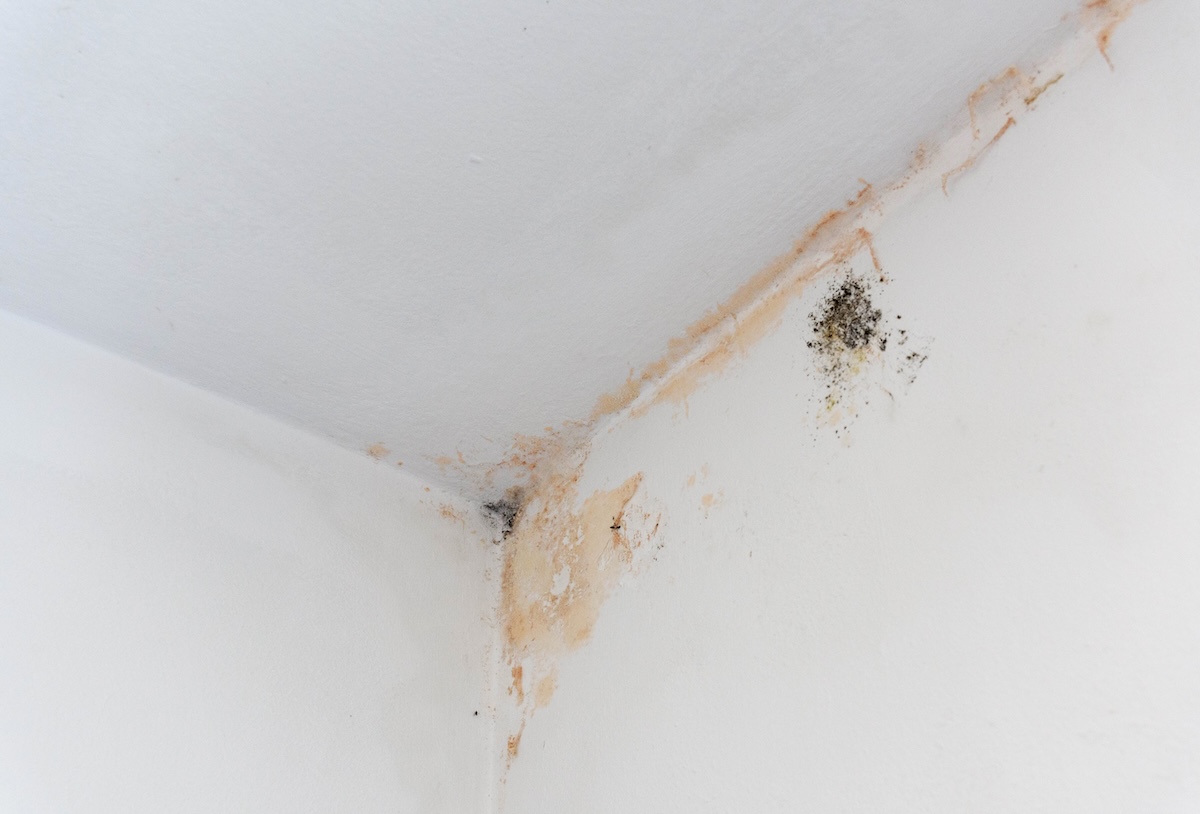
Quick answer: Black mould removal in Calgary typically costs $800 to $1,500 for a small patch, $2,500 to $5,000 for 30 to 50 square feet of basement wall, and $15,000 to $30,000 or more for a whole house after flooding. Every job is quoted after an inspection. Colour alone doesn’t tell you the type of mould, but any indoor growth should be removed and the moisture behind it fixed.
Finding dark spots on a basement wall is unsettling, and searching “black mould” online rarely helps, because much of what comes up is alarming. This guide sticks to what Calgary homeowners need to know: what black mould is, why basements and attics here grow it, what removal costs, when you can clean it yourself and what insurance usually covers. If the growth covers more than a few small patches, our mould remediation and removal team in Calgary can assess it.
What Is Black Mold, Really?
“Black mould” usually means Stachybotrys chartarum, a greenish-black mould that grows on materials high in cellulose, like the paper facing on drywall, ceiling tiles and wood, when they stay wet for a long time. It tends to follow slow leaks or water trapped behind a wall, not a quick spill that was dried right away.
Colour isn’t proof of species, though. Many common moulds look dark green, grey or black, and Health Canada describes mould as coming in a variety of colours. It also notes that in most cases there’s no need to identify the specific species in your home. That’s good news for your budget: removal works the same way whatever the colour, and a lab test rarely changes the plan, as our guide to mould inspection and testing costs in Calgary explains.
Is Black Mould Dangerous?
Mould of any colour can affect health. Health Canada lists eye, nose and throat irritation, coughing and mucus build-up, wheezing and shortness of breath, worsening asthma and other allergic reactions as more likely in homes with mould and damp. Children, seniors and people with conditions like asthma or severe allergies are more at risk.
That doesn’t make a small patch an emergency. It means growth should be removed promptly and properly, and anyone with symptoms or a health condition should talk to their doctor. Our article on whether mould is dangerous goes into more detail.
Why Do Calgary Basements Get Mould?
Calgary’s air is dry most of the year, so basement mould almost always points to a specific moisture source. The usual culprits:
- Concrete foundations. Concrete is porous and stays cool. Ground moisture can wick through it, and warm indoor air condenses on cold walls and floors, especially behind framed walls and under carpet.
- Sewer backups and flooding. Summer storms, spring melt and events like the June 2013 flood on the Bow and Elbow rivers have soaked basements across the city, and many inner-city neighbourhoods have older sewer connections.
- Summer humidity. When warm, humid air reaches a cool basement, relative humidity climbs. Health Canada recommends keeping indoor humidity between 30% and 50% and running a dehumidifier when it goes higher.
- Poor ventilation. Basement bathrooms and suites without working exhaust fans, laundry areas and closed-up storage rooms trap moisture.
- Carpet and cardboard. Carpet and underlay on a concrete slab hold moisture and hide growth, and cardboard boxes against walls feed it. Health Canada’s guide to moisture and mould indoors suggests considering removing basement carpet and storing things in plastic bins.
If your basement has had water in it before, our guide to sewer backup in Calgary explains what to do and how to prevent it.
How Much Does Black Mold Removal Cost in Calgary?
The colour of the mould doesn’t set the price. Size, the materials affected, access and the moisture source do. These typical ranges come from our mould remediation cost guide for Calgary; every job is quoted after an inspection.
| Situation | Typical cost (CAD) |
|---|---|
| Small patch in a bathroom (about 10 sq ft) | $800–$1,500 |
| Basement wall mould (30–50 sq ft) | $2,500–$5,000 |
| Crawl space mould and insulation | $4,000–$8,000 |
| Full attic remediation | $8,000–$15,000+ |
| Whole-house mould after flooding | $15,000–$30,000+ |
| Inspection and testing, if needed | $300–$800 |
| Post-remediation clearance testing | $200–$600+ |
Basement mould removal cost
Most basement jobs sit in the middle of that table. A patch on one wall of an unfinished basement is at the low end. A finished basement where mould has grown behind drywall, into insulation and under carpet costs more, because those materials have to come out. Repairs such as new drywall, insulation, paint and flooring add to the total, so ask whether a quote includes them.
Attic mold removal cost
Full attic remediation typically runs $8,000 to $15,000 or more. Calgary attics are prone to mould because of chinooks: warm, moist air leaking up from the house frosts the underside of the roof sheathing in cold weather, then melts during a thaw, and ice dams on Calgary roofs can push meltwater under the shingles. Bathroom fans that vent into the attic add to the problem. Fixing ventilation and air leaks is part of the job, or the mould comes back.
Can You Remove Basement Mould Yourself?
Sometimes. A common rule of thumb is that homeowners can handle up to about 10 square feet. Health Canada’s mould guidance is similar: it calls an area small when there are one to three patches, each under 1 m² (about 10 square feet), and says small and medium areas can usually be cleaned by a homeowner. For a patch larger than 3 m² (about 32 square feet), or mould that keeps coming back, it suggests a professional.
If you do it yourself, follow Health Canada’s basics: wear an N95 respirator, gloves and eye protection, scrub with water and unscented dish detergent, HEPA-vacuum before and after, and dry the area completely. Health Canada says there’s no need to use bleach. Throw out mouldy cardboard and other porous items, and fix the moisture source or the mould will return.
Leave it to a professional if:
- The area is larger than a few small patches, or it keeps coming back
- The water involved was sewage or flood water
- You suspect hidden mould inside walls or above ceilings
- Anyone in the home has a respiratory condition, severe allergies or other health concerns
- Your home was built before about 1990 and the job means cutting drywall, ceilings or flooring
Why Does Asbestos Matter in Older Calgary Homes?
Many Calgary basements were finished decades ago. In homes built before about 1990, drywall joint compound, textured ceilings, vinyl flooring and its adhesive, and pipe insulation may contain asbestos. Cutting out mouldy drywall can release asbestos fibres along with mould spores, so suspect materials should be tested before anyone opens a wall. In Alberta, asbestos work is governed by Part 4 of the Occupational Health and Safety Code.
DKI Calgary tests before cutting when a home’s age calls for it, with samples analyzed by an accredited lab. If asbestos turns up, our asbestos testing and abatement team in Calgary handles it under the same project manager, so the mould job doesn’t stall.
How Do Professionals Remove Basement Mould?
Professional remediation follows the IICRC S520 standard for mould. On a typical basement job, the steps look like this:
- Inspect and find the moisture source. Moisture readings map how far the water reached.
- Test for asbestos in older homes. Suspect materials are sampled before any cutting.
- Contain the area. Plastic barriers and HEPA air filtration keep spores from spreading.
- Remove affected materials. Mouldy drywall, insulation, carpet and underlay go out in sealed bags.
- Clean what stays. Framing and concrete are HEPA-vacuumed, cleaned and treated.
- Dry and verify. The space is dried and checked, with clearance testing if you want it.
- Rebuild. New insulation, drywall and flooring go in once the area is clean and dry.
Our project managers hold IICRC AMRT certification, and one is certified in mould inspection. Because our rebuild crew is in-house, the same project manager takes you from removal through finished repairs.
Does Insurance Cover Black Mould Removal?
It depends on where the moisture came from. Mould that follows a sudden, accidental water loss your policy covers, like a burst pipe reported promptly, is often covered as part of that claim, sometimes with a lower limit for mould. Mould from a slow leak, ongoing humidity or poor maintenance is usually excluded.
Basement water adds another layer. The Insurance Bureau of Canada notes that basement damage from a sewer backup is only covered if you bought optional sewer backup coverage, and that groundwater and seepage coverage are typically not standard. Check your policy and talk to your insurer before work starts.
Our guide to whether water damage is covered by home insurance in Calgary explains the difference between sudden and gradual damage.
When Should You Call a Professional?
Call when mould covers more than a few small patches, comes back after cleaning, follows sewage or flood water, or sits on materials you’d have to cut out. Call too if you smell mould but can’t find it, or your home was built before about 1990. Our mould remediation specialists in Calgary will find the moisture, remove the mould safely and document everything for your insurer.
Frequently Asked Questions
Can I remove black mold myself?
For small areas, often yes. Health Canada considers one to three patches, each under about 10 square feet, a small area a homeowner can usually clean with water and dish detergent, an N95 respirator, gloves and a HEPA vacuum, with no need for bleach. Larger areas, mould that keeps returning, sewage-related growth and hidden mould are best left to professionals.
How much does basement mould removal cost in Calgary?
Typical ranges are $800 to $1,500 for a small patch of about 10 square feet, $2,500 to $5,000 for 30 to 50 square feet of basement wall and $15,000 to $30,000 or more for whole-house mould after flooding. Finished basements cost more because drywall, insulation and carpet have to come out. Every job is quoted after an inspection.
Is black mould more dangerous than other mould?
Not in a way that changes what you should do. Colour doesn’t confirm the type, and Health Canada notes there’s usually no need to identify the species. Mould and damp of any kind can cause irritation, coughing, wheezing and asthma flare-ups, so indoor growth should be removed. If anyone in the home has symptoms or a health condition, talk to your doctor.
Does bleach kill black mould?
Health Canada says there’s no need to use bleach to clean up mould; water and unscented dish detergent work for small areas. Bleach can lighten a stain without removing growth that has rooted into porous materials like drywall, and it adds fumes to a closed basement. Mouldy drywall, insulation and carpet usually need to be cut out and replaced.
How long does basement mould removal take?
Small jobs, like a single patch, can often be done in a day. A finished basement usually takes several days to a week or more, and longer if the area still needs drying or asbestos testing comes first. Repairs to drywall, insulation and flooring follow once the space is clear. You’ll get a realistic schedule after the inspection.
Get Help With Basement Mould in Calgary
Found dark spots on a basement wall or in the attic? Call DKI Calgary 24/7 at 1-888-272-9543. We serve Calgary, Airdrie, Chestermere, Cochrane, Crossfield, Irricana, Beiseker and Rocky View County, and we’ll take the job from inspection to rebuild, from disaster to done.