
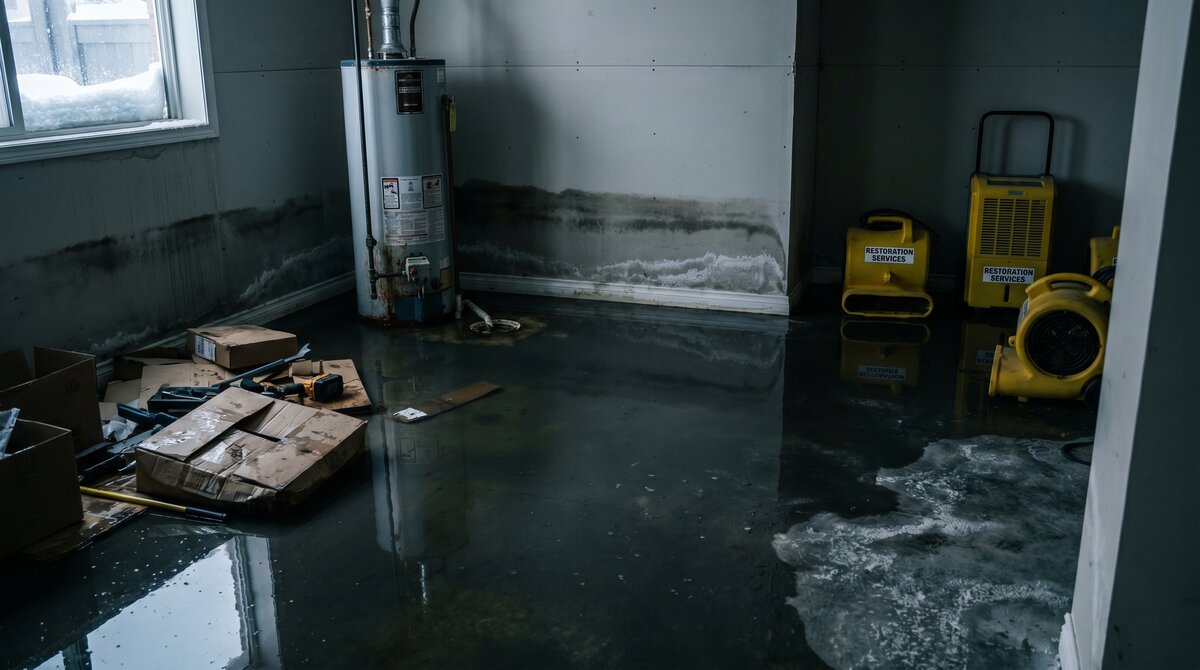
Sewer backup is one of the most disruptive forms of water damage a Calgary homeowner can face — and one of the most misunderstood when it comes to insurance, cleanup costs, and what counts as a DIY problem versus a regulated biohazard. Whether you’re in Sunnyside, Bowness, Bridgeland, Inglewood, Beltline, or any of Calgary’s older inner-city communities still served by combined sewers, our team’s water and flood damage restoration service handles sewer backup cleanup end-to-end. This guide walks you through exactly what sewer backup is, what cleanup costs in Calgary in 2026, how the City’s backwater valve subsidy works, what insurance covers, and how to prevent the next one.
Table of Contents
- What sewer backup is and why Calgary is uniquely exposed
- The first hour: stop the damage from compounding
- Sewer backup cleanup costs in Calgary (2026)
- The professional cleanup process step-by-step
- Sewer backup insurance in Calgary: what’s actually covered
- Prevention — and how to claim the City of Calgary subsidy
- Why DKI Calgary is the right cleanup partner
- Conclusion
- Frequently asked questions
Key Takeaways
- Sewer backup is Category 3 (“black water”) under the IICRC S500 standard — full biohazard protocols are mandatory, not optional.
- Professional sewer backup cleanup in Calgary typically costs $2,500 to $12,000+ depending on affected square footage and whether contaminated materials need removal.
- Standard Calgary home insurance does NOT automatically cover sewer backup. You need a specific sewer backup endorsement — usually $40–$120 per year.
- The City of Calgary offers a backwater valve subsidy of up to $1,500–$2,000 for eligible homes — most homeowners forget to apply.
- Sunnyside, Bowness, Inglewood, Bridgeland, and other older Calgary neighborhoods on combined sewers see backup risk spike during heavy rain and spring melt.
What sewer backup is and why Calgary is uniquely exposed
A sewer backup happens when wastewater from your home’s drainage system reverses direction and flows back up through floor drains, toilets, or basement fixtures. The IICRC S500 industry standard classifies this as Category 3 water — contaminated with pathogens, decomposing organics, and chemical residues. Sewer water carries E. coli, Hepatitis A, parasites, and sewer gases (methane and hydrogen sulfide). It is not a wet-vac problem.
Calgary has two layered risk factors that make sewer backup more common here than in many Canadian cities. First, Calgary’s older inner-city neighborhoods — Sunnyside, Bridgeland, Inglewood, Bowness, Mission, and parts of the Beltline — were originally built with combined sewers that carry both wastewater and stormwater in the same pipe. During heavy rainfall (and during the kind of rapid spring melt Calgary regularly experiences), these systems overload and reverse. Second, Calgary’s flood history — including the catastrophic 2013 Alberta floods that overwhelmed both the Bow and Elbow river systems — is a reminder that municipal infrastructure can be pushed past capacity in extreme events. Even decades later, many properties are still rebuilding sewer-resilience defenses.
If you’ve seen or smelled this in your basement, treat it as a biohazard event. Our broader walkthrough on preventing basement flooding in Calgary covers grading and drainage; this guide focuses specifically on what to do after sewer water has already entered the home.
The first hour: stop the damage from compounding
The first 60 minutes determine how much your eventual restoration will cost. Take these steps before calling anyone except 911 (if there’s an electrical or gas safety risk):
- Stay out of the affected area. Do not walk through standing sewage near electrical outlets or running appliances.
- Stop using all water in the house. Every flush, shower, dishwasher cycle, and laundry load makes the backup worse.
- Turn off power to the affected zone at the breaker before entering with anything electrical.
- Open windows and doors to vent sewer gases (methane, hydrogen sulfide).
- Photograph and video everything before any cleanup. Your insurance claim will be approved or denied largely based on this evidence — how property insurance claims after a disaster actually work covers documentation in detail.
- Call a certified restoration company with 24/7 emergency response. DKI Calgary’s residential restoration team dispatches across Calgary in under 90 minutes on most calls.
- Notify your insurance company after the active damage has stopped — not before.
Sewer backup cleanup costs in Calgary (2026)
“How much does sewer backup cleanup cost?” is the most common question we get. Real ranges based on jobs we’ve completed across Calgary in the last 18 months:
- Minor backup, hard-surface basement only (under 200 sq ft): $2,000–$4,000. Extraction, sanitization, drying, antimicrobial application, post-clean air quality verification.
- Moderate backup, partially finished basement (200–600 sq ft): $4,000–$9,000. Includes drywall removal up to 12 inches above the waterline, carpet and pad disposal, structural drying for 3–5 days, antimicrobial.
- Major backup, fully finished basement (600+ sq ft): $9,000–$25,000+. Often involves full flooring replacement, cabinet/vanity removal, HVAC sanitization, and contents restoration for damaged belongings.
Calgary cleanup costs tend to run slightly higher than rural Alberta averages because of higher labour rates and more demanding municipal disposal protocols for Category 3 waste.
The professional cleanup process step-by-step
Following the IICRC S500 standard, certified sewer backup cleanup in Calgary follows seven phases:
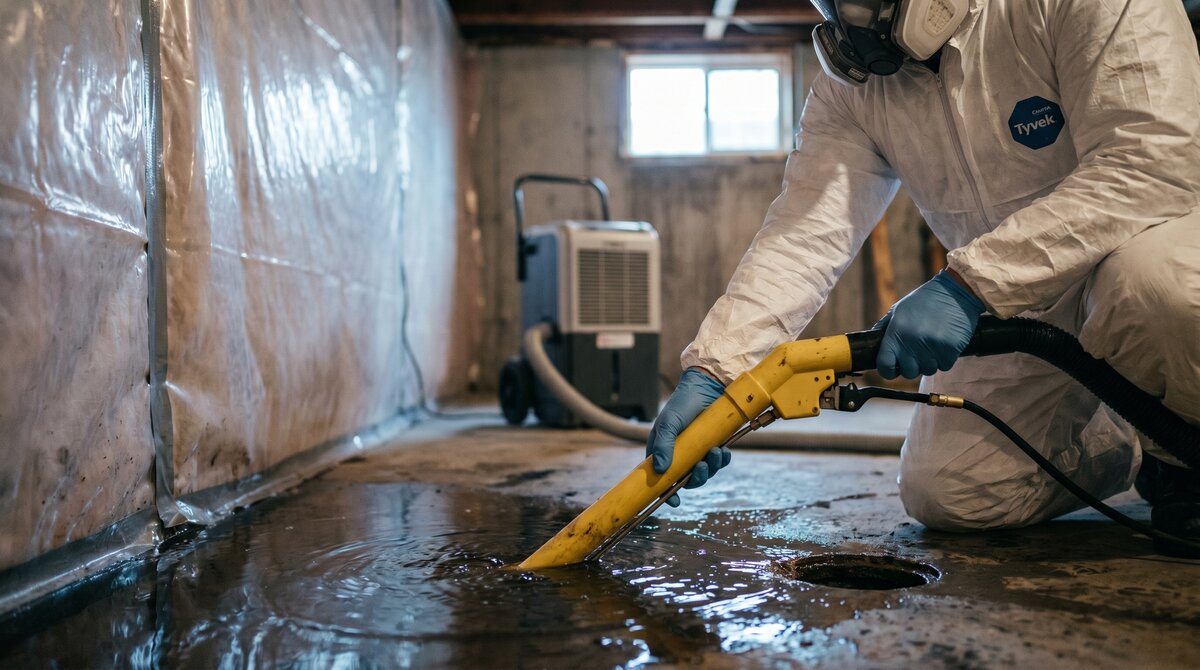
1. Inspection and biohazard assessment
The crew documents the contamination extent using moisture meters and infrared imaging, scopes the job for your insurance adjuster, and identifies hidden moisture inside walls or under flooring.
2. Containment
Plastic barriers and negative-air machines isolate the contaminated zone from the rest of your home, preventing pathogen migration through HVAC and foot traffic.
3. Extraction
Truck-mounted extractors remove standing sewage. Hand-held vacuums cannot legally or safely be used on Category 3 water.
4. Removal of unsalvageable materials
Drywall, insulation, carpet pad, and any absorbent material that contacted sewage is removed and disposed of as biohazard waste — labeled per City of Calgary requirements.
5. Cleaning and antimicrobial application
Multiple passes with EPA-registered disinfectants designed for Category 3 water across every hard surface.
6. Structural drying
Commercial dehumidifiers and air movers run for 3–7 days. Hidden moisture left behind is the #1 cause of long-term mould issues — drying must be thorough and verified with moisture readings.
7. Verification and reconstruction
Post-remediation moisture verification confirms the area is safe to rebuild. Reconstruction (drywall, flooring, paint) can begin from there.
Sewer backup insurance in Calgary: what’s actually covered
This catches most Calgary homeowners off-guard: standard Calgary home insurance policies do not cover sewer backup damage by default. According to the Insurance Bureau of Canada, you need a specific sewer backup endorsement (sometimes called a rider or add-on). Coverage limits typically range from $10,000 to $50,000.
Premium for the endorsement is usually $40–$120 per year in Calgary — dramatically less than even a minor uncovered cleanup. If you don’t have the endorsement and a backup occurs, your insurer may decline the entire claim including damage to flooring, drywall, and personal belongings. For Calgary-specific coverage questions, our breakdown of water damage and home insurance in Calgary covers the common exclusions to watch for.
Prevention — and how to claim the City of Calgary subsidy
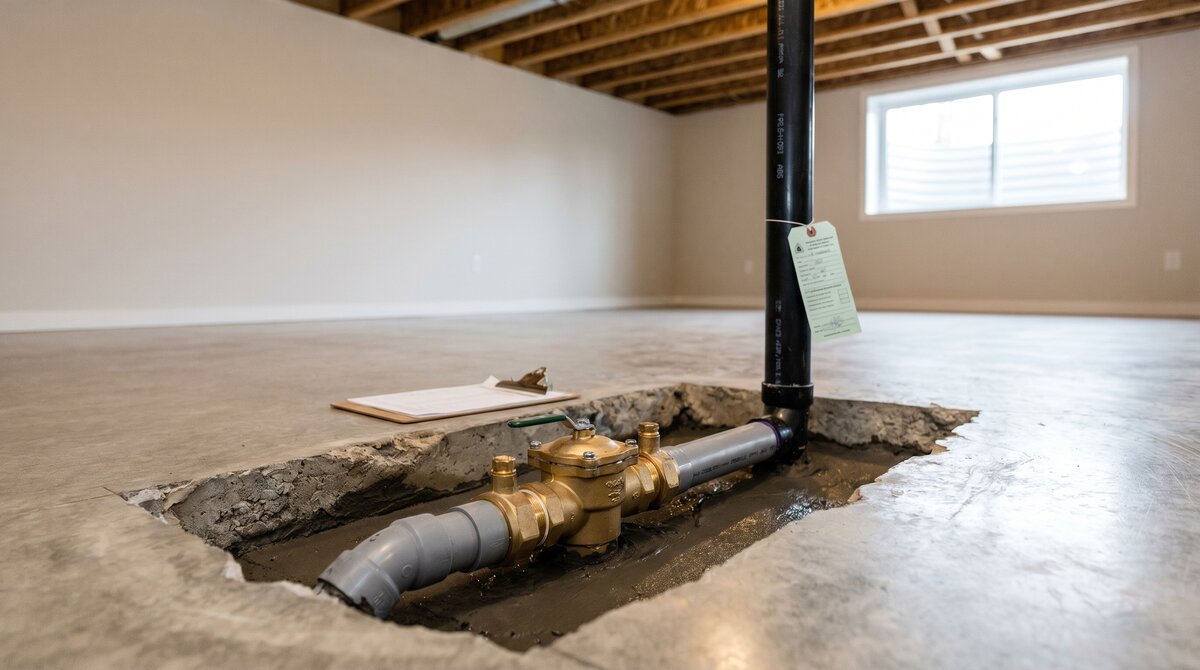
Calgary homeowners have one prevention advantage most Canadian cities don’t: the City of Calgary’s Sanitary Sewer Service Connection Replacement and Backwater Valve Installation Subsidy. Eligible homeowners can receive partial reimbursement (often $1,500–$2,000) for installing a backwater valve on the main sewer line.
Five prevention measures, ranked by ROI:
- Install a backwater valve on your main sewer line — and claim the City of Calgary subsidy. Visit calgary.ca and search “backwater valve subsidy” for the current program details and application form.
- Add or upgrade a sump pump with battery backup if your basement doesn’t already have one. Battery backup is essential — Calgary power outages during storms are common.
- Disconnect downspouts from the sewer system and direct them at least two metres from the foundation. The City of Calgary actively encourages this.
- Schedule annual or biennial drain camera inspections to catch root infiltration in older clay laterals (common in Bridgeland, Inglewood, Sunnyside).
- Don’t flush wipes, grease, or feminine products — these are leading causes of municipal sewer overloads during high-flow events.
Sewer backup in your Calgary home right now?
DKI Calgary’s residential restoration crews are dispatched 24/7 across Calgary — Sunnyside to Cranston, Bowness to Auburn Bay. Average on-site time under 90 minutes.
Why DKI Calgary is the right cleanup partner
Sewer backup is not a job for a general handyman or a “we’ll fix it ourselves” weekend project. Three reasons Calgary homeowners choose DKI Calgary for this specific service:
Specialist Category 3 experience. Sewer backup cleanup is regulated biohazard work. Our crews are IICRC-certified and equipped specifically for Category 3 water — biohazard-rated PPE, EPA-registered disinfectants, negative-air containment, proper waste disposal protocols. DKI Calgary handles all phases under one roof, including contents restoration if your belongings were affected and full water and flood damage restoration if the backup escalated into a larger flood event.
Direct insurance billing. We work with every major Canadian insurer and bill them directly in most cases. We also document the entire job to the standard adjusters expect, which dramatically reduces claim disputes.
Calgary-wide rapid response. Our crews reach inner-city Calgary (Sunnyside, Bridgeland, Beltline, Inglewood, Bowness) and outer communities (Aspen Woods, Mahogany, Tuscany, Auburn Bay, Royal Oak, Cranston) in under 90 minutes in most cases. Sewer backup gets worse by the hour — fast on-site presence is the single biggest variable in eventual total cost.
Ready for cleanup or need a quote?
Call DKI Calgary 24/7 at 1-888-272-9543 or submit an emergency request online. We’ll have a certified crew at your door, document the scope for your insurer, and start extraction the same day.
Conclusion
Sewer backup cleanup in Calgary is a regulated biohazard process — not a DIY project. The first 24 hours are critical: stop using water, document everything, call a certified restoration company, and notify your insurer (assuming you have the sewer backup endorsement). Expect cleanup costs in Calgary to land between $2,000 and $12,000+ depending on the extent. After the immediate event, install a backwater valve and apply for the City of Calgary subsidy — it’s the single best long-term defense, and most Calgary homeowners forget the subsidy exists.
Frequently asked questions
How much does sewer backup cleanup cost in Calgary?
Most Calgary jobs land between $2,000 and $12,000 depending on affected square footage and whether porous materials need removal. Hard-surface basements under 200 sq ft can finish near $2,000; fully finished basements with cabinetry can exceed $25,000.
Does my Calgary home insurance cover sewer backup damage?
Only if you have purchased the sewer backup endorsement specifically. It is not included in standard Calgary home insurance policies by default. The endorsement typically costs $40–$120 per year and covers $10,000 to $50,000 in damage depending on the policy.
How long does sewer backup cleanup take in Calgary?
The active cleanup and drying portion typically takes 3–7 days. Reconstruction (drywall, flooring, paint) adds another 1–3 weeks depending on materials and contractor scheduling.
Does Calgary offer a rebate for backwater valves?
Yes. The City of Calgary’s Sanitary Sewer Service Connection Replacement and Backwater Valve Installation Subsidy reimburses eligible homeowners up to $1,500–$2,000 for installation. Application is at calgary.ca — search “backwater valve subsidy”.
Which Calgary neighborhoods have the highest sewer backup risk?
Older inner-city communities on combined sewers — Sunnyside, Bridgeland, Inglewood, Bowness, Mission, and parts of the Beltline — see the highest risk during heavy rain and spring melt. Newer suburbs (Mahogany, Auburn Bay, Cranston) are on separated systems but still face risk from internal plumbing issues.
Can I clean up a small sewer backup myself?
It’s strongly discouraged. Category 3 water requires PPE rated for biohazard exposure, EPA-registered disinfectants, and proper waste disposal. DIY cleanup almost always voids the sewer backup portion of your insurance claim.