
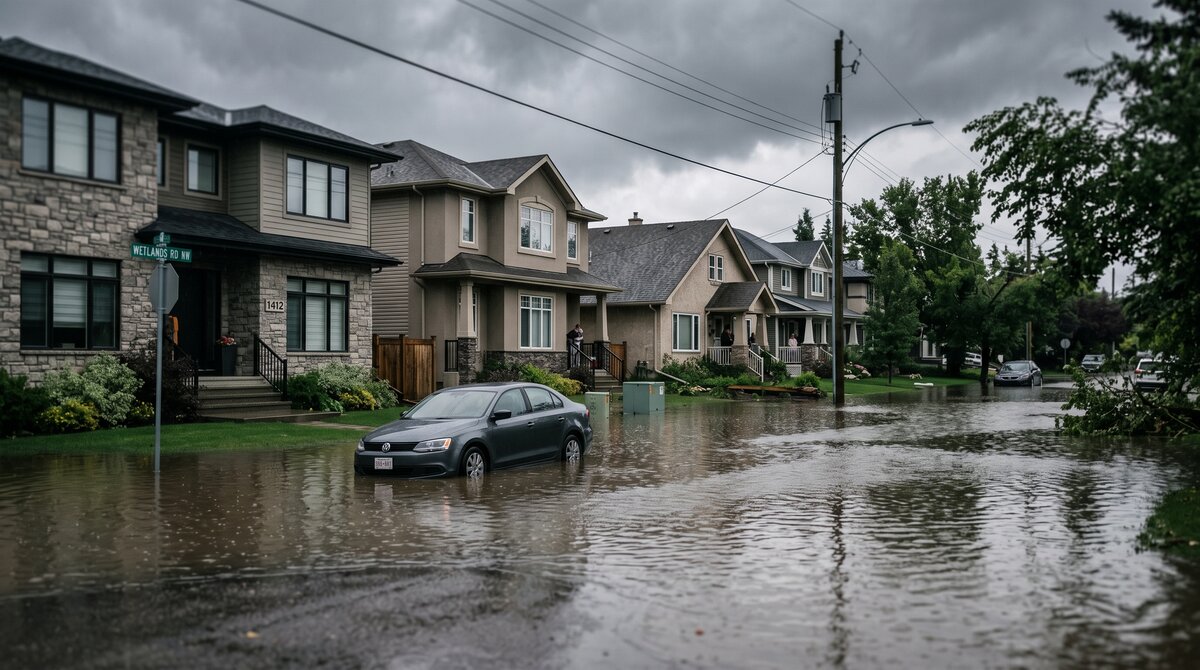
Many Calgary homeowners assume their house insurance covers flooding. It usually does not. Overland water insurance is a specific add-on that covers water entering your home at ground level from heavy rain, rapid snowmelt, or an overflowing river or storm sewer — exactly the kind of flooding that hit Calgary hardest in past disasters, and exactly what standard policies exclude. With our city’s rivers, intense summer storms, and spring thaw, understanding this coverage gap is one of the most important things a homeowner can do. This 2026 guide explains what overland water insurance covers, how it differs from other water coverage, and whether you need it.
Table of Contents
Key Takeaways
- Overland water insurance covers water that enters your home at ground level from heavy rain, snowmelt, or overflowing rivers and storm sewers.
- Standard home insurance usually excludes overland flooding, so this coverage must be added as an optional endorsement.
- Overland water coverage is separate from sewer backup coverage — many homeowners need both.
- Calgary’s rivers, summer storms, and spring thaw make overland flooding a real and recurring risk.
- Reviewing your policy before flood season is far cheaper than discovering a coverage gap after a flood.
What overland water insurance is
Overland water insurance is an optional coverage that pays for damage when water flows into your home over land — from torrential rain, melting snow, or the overflow of a river, lake, or storm sewer. It was introduced to Canadian homeowners only in recent years, largely in response to major flood events, and it fills a gap that standard policies leave wide open.
The key word is “overland.” Most home insurance covers sudden internal water damage, like a burst pipe, but specifically excludes surface water that enters from outside. Without the overland endorsement, a flooded basement from a summer downpour or spring thaw may not be covered at all. When that water does get in, the cleanup is urgent and hazardous, which is where our water and flood damage restoration services come in.
Overland water vs. sewer backup vs. standard coverage
Water can enter your home several ways, and each is treated differently by insurance. Confusing them is how homeowners end up underinsured. Here is how the three main types compare.
| Coverage | What it covers | Usually included? |
|---|---|---|
| Standard policy | Sudden internal damage (e.g., burst pipe) | Yes |
| Overland water | Surface water from rain, snowmelt, rivers | No — optional add-on |
| Sewer backup | Water backing up through drains and sewers | No — optional add-on |
Because overland water and sewer backup are separate endorsements, a homeowner can have one and not the other — and a single storm can trigger both. This is why reviewing your full policy matters. Our guide on whether water damage is covered by home insurance in Calgary breaks down these distinctions, and our overview of what property damage insurance actually covers shows where the common gaps are.
Why Calgary homeowners are at risk
Calgary is one of the higher-risk cities in Canada for overland flooding. The city sits at the confluence of the Bow and Elbow rivers, experiences intense summer thunderstorms, and goes through a spring thaw that can send large volumes of meltwater across the landscape quickly. Each of these can push water over land and into homes, especially in low-lying neighbourhoods.
Climate trends have made heavy-rain events more frequent, increasing the odds of overland flooding even for homes outside traditional flood plains. A sudden cloudburst can overwhelm storm drains in minutes. Our guide on spring thaw flooding in Calgary covers the seasonal risk, and the Insurance Bureau of Canada’s flood resources provide current guidance on overland flood coverage across the country.
Do you need overland water coverage?

If you own a home in Calgary, especially one with a basement or in a low-lying or river-adjacent area, overland water coverage is well worth considering. The cost of adding the endorsement is small compared with the cost of a flooded basement, which can run into the tens of thousands of dollars once you account for structural drying, mould prevention, and contents.
Even homes that have never flooded can be hit by an unusually heavy storm, and the endorsement is the only thing standing between you and an uncovered loss. The best move is to call your insurance provider, ask specifically about overland water and sewer backup endorsements, and confirm your limits before flood season. Pairing the right coverage with good prevention — see our guide on preventing basement water damage — gives you the strongest protection.
What to do if you flood
If overland water gets into your home, act quickly but safely. Avoid electrical hazards and contaminated water, move people and pets to safety, and document everything with photos and video before you touch anything — this protects your insurance claim. Then call your insurer and a professional restoration company as soon as possible.
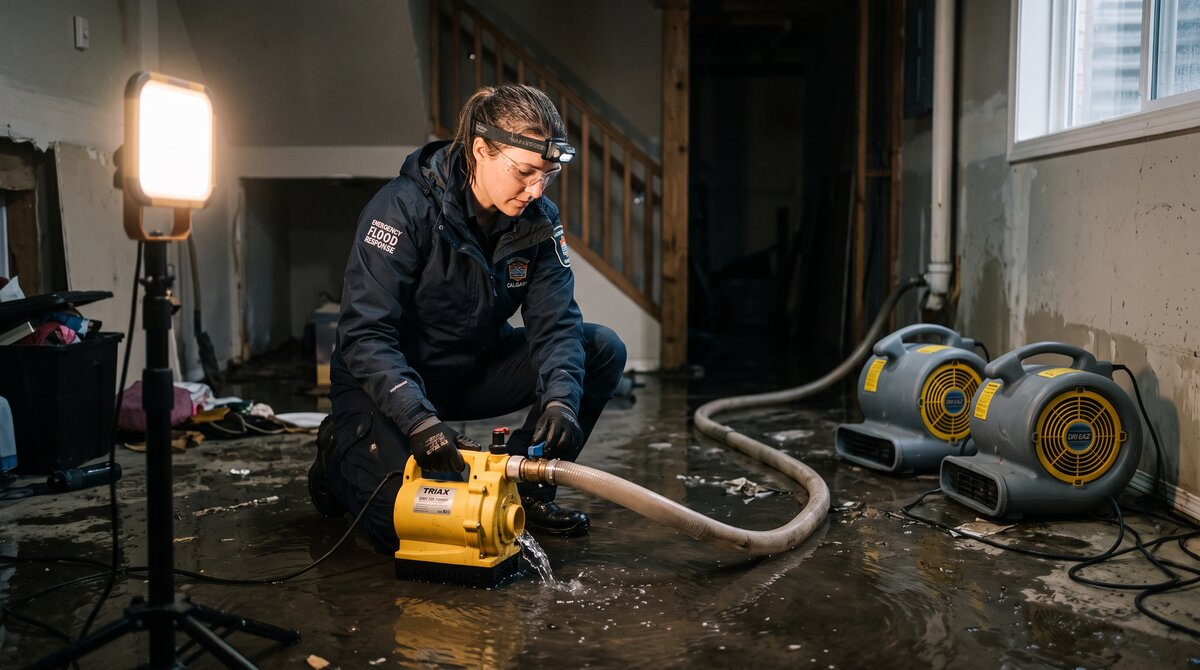
Fast water extraction and drying are critical, because mould can begin growing within 24 to 48 hours and standing water keeps causing damage. A restoration company can begin mitigation immediately and provide the documentation your adjuster needs. Understanding the process in advance helps; our guide on how a property insurance claim works walks through each step so a flood does not also become a claims headache.
Why DKI Calgary is the right choice when you flood
DKI Calgary is part of North America’s largest disaster restoration network, serving Calgary and surrounding communities with 24/7 emergency flood response. We have seen what overland flooding does to Calgary homes, and we know that speed and proper documentation are what protect both your property and your insurance claim.
Because we handle water extraction, structural drying, mould prevention, contents restoration, and rebuild in-house, your flooded home is treated as one continuous recovery — and we work directly with your insurer throughout, providing the records adjusters need. We cannot sell you the overland endorsement, but we can make sure that if the worst happens, your home is restored quickly and your claim is well supported. Local, certified, and available any hour, we are who Calgary calls when the water comes in.
Conclusion
Overland water insurance fills the single biggest gap in most Calgary homeowners’ coverage: flooding from rain, snowmelt, and overflowing rivers that standard policies exclude. Given our city’s rivers, storms, and spring thaw, it is coverage worth having — and it is separate from sewer backup coverage, so many homeowners need both. Adding the endorsement costs little next to the price of an uncovered flooded basement. Review your policy before the next storm, ask your insurer the right questions, and know exactly who to call if the water comes in.
Frequently Asked Questions
What is overland water insurance?
It is optional home insurance coverage for water that enters your home at ground level from heavy rain, snowmelt, or overflowing rivers and storm sewers. Standard policies exclude this kind of surface flooding, so it must be added as an endorsement.
Is overland flooding covered by standard home insurance?
No. Standard policies typically cover sudden internal water damage like a burst pipe but exclude overland flooding from surface water. Without the overland water endorsement, a basement flooded by a storm or spring thaw may not be covered at all.
What’s the difference between overland water and sewer backup coverage?
Overland water covers surface water entering from outside, while sewer backup covers water backing up through your drains and sewer connections. They are separate optional endorsements, and a single storm can cause both, so many Calgary homeowners need both coverages.
Do I need overland water coverage in Calgary?
If you own a home with a basement or live in a low-lying or river-adjacent area, it is strongly worth considering. Calgary’s rivers, summer storms, and spring thaw make overland flooding a real risk, and the endorsement costs far less than an uncovered flood.
What should I do if my home floods?
Stay safe by avoiding electrical hazards and contaminated water, document everything with photos before cleanup, then call your insurer and a professional restoration company immediately. Fast extraction and drying limit damage and help prevent mould, which can start within 24 to 48 hours.