Key Takeaways
- The IICRC S500 standard defines three water damage categories by contamination level: Category 1 (clean), Category 2 (grey), and Category 3 (black).
- Category 1 water can escalate to Category 2 within 24–48 hours if left standing or untreated in a Calgary home.
- Category 3 includes sewer backups, Bow or Elbow River flooding, and toilet overflows containing sewage — never clean it up without proper PPE.
- Insurance treatment in Alberta varies sharply by category, and sewer backup typically requires a separate endorsement on your policy.
- The City of Calgary Sewer Backup Subsidy Program reimburses eligible homeowners for backflow valve installation after a Category 3 event.
- Correct category determination drives the restoration plan, the PPE required, and what materials can be dried versus removed.
Table of Contents
When your basement starts to flood at 2 a.m., the first question an IICRC-certified restorer asks isn’t “how much water?” — it’s “what kind of water?” That single classification, drawn from the IICRC S500 Standard for Professional Water Damage Restoration, determines whether your carpet can be saved, whether your drywall has to come out, and whether your insurance adjuster opens or closes the claim quickly. Below, we break down all three categories with the Calgary-specific sources, escalation timelines, and restoration approaches our crews see every week.
What Is Category 1 Water Damage (Clean Water)?
Category 1 water originates from a sanitary source and poses no substantial risk from dermal, ingestion, or inhalation exposure. Per IICRC S500, this is water that was clean at the moment of release — it has not yet picked up significant contamination from soils, building materials, or biological growth.
Common Category 1 sources in Calgary homes
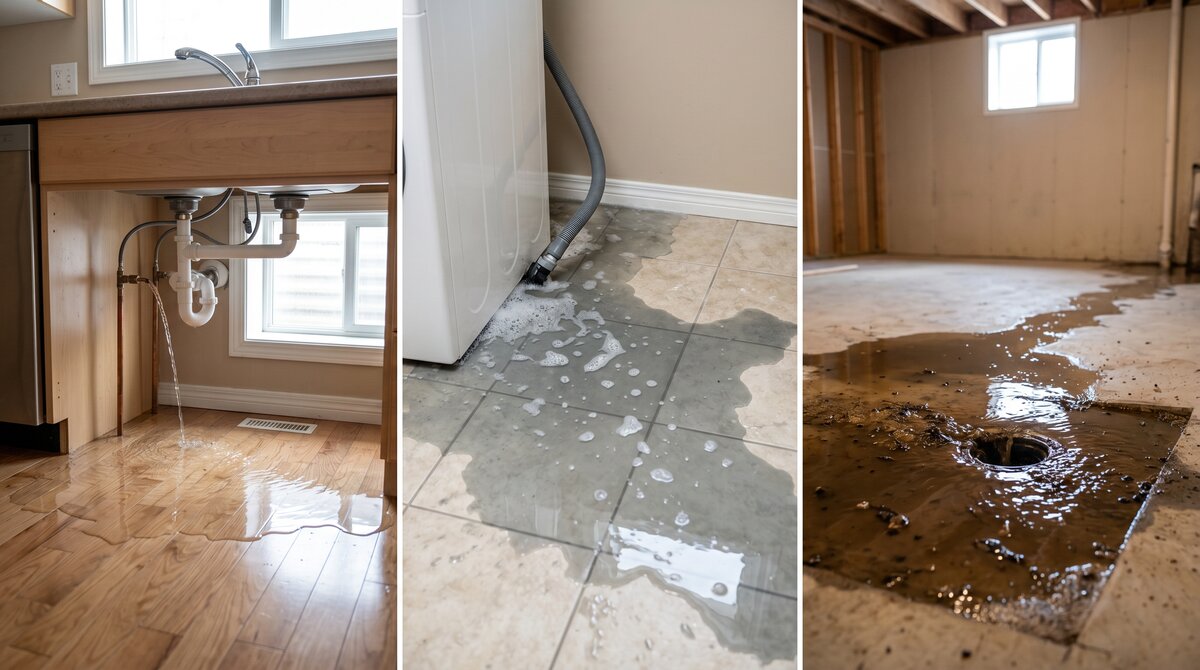
- Burst copper supply lines under kitchen and bathroom sinks (especially during a sudden Chinook-to-deep-freeze swing)
- Failed dishwasher or fridge water-line connectors before any cross-contamination
- Overflowing bathtubs or sinks with the tap left running
- Clean snow-melt seepage through a small roof-flashing leak in spring
- Burst hot-water tank in a clean utility room
The 24–48 hour escalation window
This is the most important thing to understand about Category 1: it does not stay Category 1 for long. The IICRC S500 standard recognizes that clean water becomes Category 2 within roughly 24 to 48 hours once it contacts building materials, dust, and soils — or sooner in warm conditions. In a Calgary basement that hits 21°C in summer, that timeline compresses fast.
Category 1 restoration approach
If addressed within the first day, most Category 1 incidents can be dried in place. Restorers extract standing water, set air movers and dehumidifiers, monitor moisture readings in drywall and subfloor, and typically salvage carpet, underpad, and most affected materials. Documentation for insurance is straightforward. The signs of hidden water damage in walls and floors guide explains what restorers look for after the obvious water is gone.
What Is Category 2 Water Damage (Grey Water)?
Category 2 water contains significant contamination and has the potential to cause discomfort or sickness if ingested or contacted. It carries detergents, urea, soaps, food residue, or microbial loads that exceed safe handling thresholds.
Common Category 2 sources in Calgary homes
- Dishwasher or washing machine overflow (detergents and soils make it Category 2 immediately)
- Toilet bowl overflow containing urine but no fecal matter
- Aquarium leaks larger than a few litres
- Sump pump failure where water has sat stagnant for hours
- Hydronic (boiler) system discharge containing rust or chemical additives
- Punctured waterbed
- Any Category 1 water that has been standing more than 24–48 hours
Escalation risk
Category 2 escalates to Category 3 in 48–72 hours if microbial amplification begins. In Calgary’s relatively dry climate this clock runs a bit slower than in coastal cities, but a finished basement with vapor-barrier polyethylene trapping moisture against drywall can hit Category 3 faster than the average homeowner expects.
Category 2 restoration approach
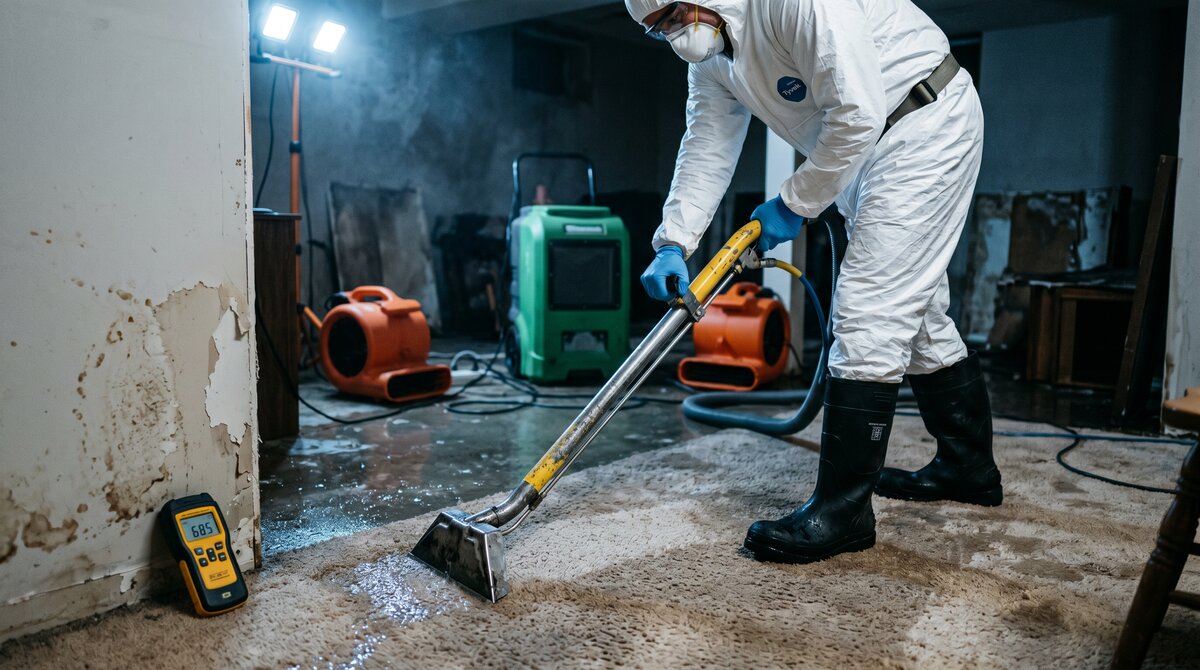
Per IICRC S500, Category 2 work requires a minimum of nitrile gloves, eye protection, and an N95 respirator at the technician’s discretion. Carpet pad in a finished living space is usually removed and replaced; carpet itself may be saved if treated promptly with an EPA-registered antimicrobial. Drywall is often cut back 2 to 4 inches above the waterline (the “flood cut”) and the wall cavity is dried with directed airflow. Our water and flood damage service page outlines the full IICRC-aligned process.
What Is Category 3 Water Damage (Black Water)?
Category 3 water is grossly contaminated and can contain pathogenic, toxigenic, or otherwise harmful agents. This is the most hazardous classification, and IICRC S500 treats it as a non-negotiable health risk for occupants, restorers, and insurance adjusters alike.
Common Category 3 sources in Calgary
- Sewer backup through floor drains, toilets, or basement plumbing — see our Calgary sewer backup guide for what to do in the first hour
- City of Calgary storm sewer surcharge during summer thunderstorms or rapid spring melt
- Bow or Elbow River overland flooding (Sunnyside, Bowness, Roxboro, Mission, and Inglewood are historically vulnerable)
- Toilet overflow that contains fecal matter
- Ground surface water from natural disasters — including the type of overland flooding Calgary saw in June 2013
- Any water with visible mold colonization, regardless of original source (cross-categorized under IICRC S520 for mold remediation)
Spring melt scenarios sit in a grey zone — read our spring thaw flooding prevention guide for how meltwater that contacts ground soils is treated.
Why DIY is dangerous
Category 3 water can carry E. coli, hepatitis A, salmonella, norovirus, and various molds. The Alberta Health Services position is unambiguous: untrained occupants should not attempt cleanup of sewage or floodwater contamination. The EPA’s mold remediation guidance echoes this for any contaminated water event exceeding roughly 3 square metres of porous material.
IICRC-required PPE for Category 3
The S500 standard mandates a higher level of protection for Category 3 work:
- Full-body disposable coveralls (Tyvek or equivalent)
- Nitrile gloves over inner cotton liners
- Rubber boots, not safety shoes
- Half-face or full-face respirator with P100 cartridges
- Splash-resistant eye protection
- EPA-registered antimicrobial treatments on all affected surfaces
In a Category 3 loss, porous materials — carpet, underpad, drywall below the waterline, particleboard, insulation, MDF cabinetry — are removed and disposed of as contaminated waste under Alberta’s biohazard rules. There is no salvaging them safely.
IICRC Water Damage Categories: Quick Comparison Table
| Category | Common Calgary sources | Health risk | Restoration approach | Typical timeline |
|---|---|---|---|---|
| Category 1 (Clean water) |
Burst supply line, overflowing sink, clean snow-melt roof leak, hot-water tank failure | Low — sanitary at the source | Extract, dry in place, monitor moisture; most materials salvaged | 3–5 days to dry |
| Category 2 (Grey water) |
Washing machine or dishwasher overflow, urine-only toilet overflow, stagnant sump failure | Moderate — can cause illness if ingested or contacted | Extract, antimicrobial treatment, flood cuts, replace pad and porous materials in finished areas | 5–10 days |
| Category 3 (Black water) |
Sewer backup, Bow/Elbow River flooding, sewage toilet overflow, ground surface flooding | High — pathogenic and toxigenic | Full PPE, remove and dispose of porous materials, EPA-registered antimicrobial, structural drying, post-remediation verification | 10–21+ days |
How IICRC Categories Affect Insurance Claims in Alberta
Your IICRC category drives more than the cleanup — it drives the conversation with your insurer. In Alberta, the standard homeowner policy treats the three categories very differently.
What’s typically covered
Most standard Alberta homeowner policies cover sudden and accidental Category 1 and Category 2 losses — for example, a burst pipe or an overflowing dishwasher. Gradual leaks (a slow drip behind a vanity that caused months of damage) are usually not covered regardless of category. Our deep dive on whether water damage is covered by home insurance in Calgary walks through the common exclusions.
Sewer backup is its own thing
Category 3 sewer backup losses generally require a sewer backup endorsement — a separate rider added to your base policy. Without it, a sewer event may be entirely uninsured. Overland water and surface flooding need their own endorsement as well; the two are not interchangeable. Review your declarations page after any Calgary flood season.
City of Calgary Sewer Backup Subsidy
After a Category 3 sewer-backup loss, eligible Calgary homeowners can apply to the City’s Sewer Backup Subsidy Program for partial reimbursement on the installation of a backwater valve. This is a one-time prevention measure that significantly reduces the chance of a repeat Category 3 event.
What your adjuster will want to know
An adjuster handling a water claim typically asks three things: source of water, time of discovery, and IICRC category as assigned by the restoration contractor. The category drives scope of work, scope drives estimate, and the estimate drives the payout. Get an IICRC-certified contractor on site quickly — our piece on how to choose a restoration company in Calgary covers the credentials to look for. For broader context on what insurance does and doesn’t pay for, see our overview on what property damage insurance actually covers in Calgary.
How Water Damage Categories Escalate Over Time
The single most expensive mistake homeowners make is assuming that a small Category 1 leak will stay Category 1. It won’t. Here is the rough escalation clock the IICRC S500 standard recognizes:
- 0–24 hours
- Category 1 (clean) is still Category 1 if the source has stopped and no organic contact has occurred. Drying can usually begin in place.
- 24–48 hours
- Category 1 becomes Category 2. Microbial amplification begins on porous materials. Antimicrobial treatment is now part of the scope.
- 48–72 hours
- Category 2 becomes Category 3. Visible mold growth is possible on drywall and underpad. PPE, demolition, and disposal protocols apply.
- 72+ hours
- Almost any water-damaged porous material is treated as Category 3 by default, and the IICRC S520 mold standard often layers on top of S500.
This is why “the carpet feels almost dry, we’ll deal with it next weekend” is the most expensive sentence in restoration. For homes in flood-prone neighborhoods, our Calgary basement flooding prevention and restoration guide covers the proactive measures that reduce the chance of ever hitting that escalation clock. If you already see signs of contamination or mold, jump to our mould remediation service page.
Frequently Asked Questions
What’s the difference between Category 1 and Category 3 water?
Category 1 is clean water from a sanitary source — a burst supply line, an overflowing bathtub with the tap left on. Category 3 is grossly contaminated water containing pathogens — sewer backup, river flooding, or toilet overflow with sewage. Category 1 can usually be dried in place; Category 3 requires PPE, demolition of porous materials, and EPA-registered antimicrobials.
How quickly does Category 1 water become Category 2?
Under the IICRC S500 standard, Category 1 water typically becomes Category 2 within 24 to 48 hours of contact with building materials, dust, and soils — sooner in warmer conditions. That’s why a same-day response matters even for a “just clean water” leak.
Can I clean up Category 2 water damage myself?
For very small Category 2 events (a half-cup of dishwasher overflow on tile), basic cleanup with gloves and disinfectant is reasonable. For anything that has saturated carpet, drywall, or underpad — or anything more than about 1 square metre of porous material — IICRC-certified extraction, antimicrobial treatment, and structural drying are strongly recommended.
Is sewer backup always Category 3?
Yes. Sewer backup is, by definition under IICRC S500, Category 3 black water — even when it looks relatively clear at first. It carries fecal coliforms and pathogens regardless of visible appearance, and is handled as a biohazard in Alberta.
Does home insurance cover all three categories?
In Alberta, most standard homeowner policies cover sudden Category 1 and Category 2 losses caused by a covered peril. Category 3 sewer backup almost always requires a separate sewer backup endorsement, and overland flooding (Bow or Elbow River, surface water) requires its own overland water endorsement. Check your declarations page or speak with your broker before storm season.
How does IICRC define water damage categories?
The Institute of Inspection, Cleaning and Restoration Certification defines three categories in the ANSI/IICRC S500 Standard for Professional Water Damage Restoration. Category 1 is water from a sanitary source. Category 2 contains significant contamination. Category 3 is grossly contaminated and can contain pathogenic, toxigenic, or otherwise harmful agents. The standard is the most widely cited authority in the North American restoration industry.
Time-Sensitive: Category Determines Everything
Because Category 1 becomes Category 2 in 24–48 hours and Category 2 becomes Category 3 in 48–72 hours, every hour of delay raises the cost and complexity of restoration — and can change what your insurer will pay.
Request a 24/7 emergency water damage assessment from DKI Calgary’s IICRC-certified team →