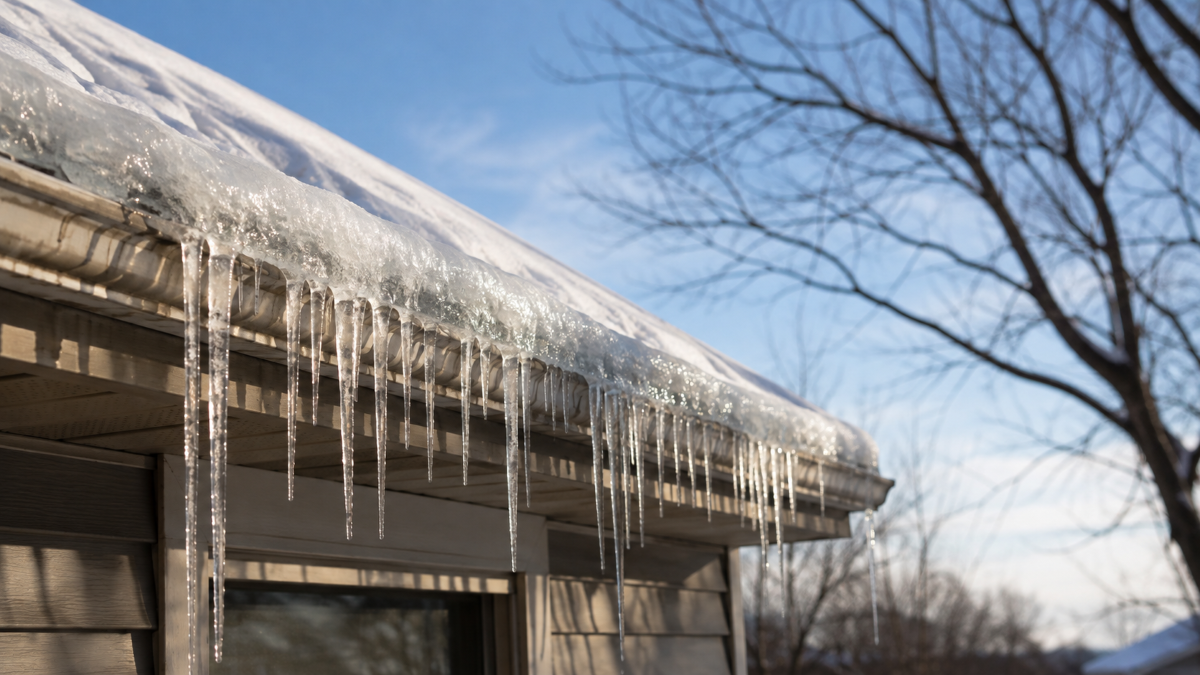
The brown ring on your ceiling appears in January, on a day when it is not even raining. Outside, a thick ridge of ice sits along the edge of your roof with icicles hanging off it. That ridge is an ice dam, and the stain below it is the first sign that meltwater has backed up under your shingles and found its way into the house. Ice dams in Calgary are made worse by our chinooks, which thaw and refreeze roofs repeatedly through the winter instead of once in spring. This guide explains how they form, what they damage inside, what your insurance will and will not pay for, and how to deal with one without wrecking your roof.
Table of Contents
Key Takeaways
- An ice dam forms when heat escaping into your attic melts snow on the upper roof and that water refreezes at the cold eaves.
- The damage is not the ice — it is the meltwater pooling behind the dam and backing up under the shingles into ceilings and walls.
- Home insurance usually covers the sudden interior water damage, but not the ice removal or the roof repair itself.
- Claims are commonly denied where the leak was gradual or where poor maintenance and inadequate attic ventilation are evident.
- Never chip ice off a roof or use rock salt on shingles — steam removal is the only method that does not damage the roof.
What an ice dam is and how it forms
An ice dam is a ridge of ice that builds along the lower edge of a roof and stops melted snow from draining off. It is a heat problem far more than a weather problem, and it follows the same sequence every time.
Warm air escapes from the heated part of your home into the attic — through ceiling light fixtures, bathroom fans, the attic hatch, plumbing stacks and gaps around top plates. That warm air heats the underside of the roof deck. Snow sitting on the upper roof melts, and the water runs down toward the eaves. The eaves overhang unheated space, so they stay at outdoor temperature, and the water refreezes there. Repeat this for a few days and the refrozen ice builds into a dam.
Then the real damage begins. Meltwater arriving from above pools behind the dam and sits on the roof. Shingles are designed to shed water flowing downhill, not to hold standing water, so it works its way up under them, through the sheathing, and into the attic — from where it appears on your ceiling. Icicles along a fascia are the visible warning that this cycle is already running.
Why Calgary roofs are especially prone
Most cold-climate cities freeze in November and thaw in March. Calgary does not. Chinook winds coming down off the Rockies can lift temperatures above freezing in the middle of winter, sometimes by a large margin within a single day, and then let them drop back overnight.
For a roof, that means the melt-and-refreeze cycle that builds an ice dam does not happen once a season — it happens repeatedly. Every chinook melts the snowpack on the roof, and every drop back below zero refreezes it at the eaves. Snow that would sit inert all winter in another city gets cycled through liquid and solid again and again on a Calgary roof.
Two other local factors compound it. Deep snow loads act as insulation, keeping the roof deck warmer underneath and encouraging melt. And many older Calgary homes were built with attic insulation and ventilation standards well below what is used today, so heat loss into the attic is higher than an owner would expect. Ice dams belong to the same family of cold-weather losses as frozen and burst pipes, and both appear in our roundup of winter home damage risks in Calgary.
What actually gets damaged inside
Homeowners tend to focus on the ice. Restoration crews focus on where the water went, because that is where the cost is. Water entering at the eaves typically travels well beyond the stain you can see.
| What gets wet | Why it matters |
|---|---|
| Attic insulation | Wet insulation compresses and loses most of its R-value, worsening the heat loss that caused the dam |
| Ceiling drywall | Stains, sags, and can fail entirely once saturated |
| Wall cavities | Water runs down inside walls, often surfacing metres from the entry point |
| Roof sheathing and framing | Repeated wetting leads to rot and delamination |
| Electrical | Water tracking through fixtures and junction boxes is a shock and fire hazard |
| Contents and finishes | Flooring, cabinetry and belongings below the leak |
There is a feedback loop worth understanding: soaked insulation stops insulating, which lets more heat reach the roof deck, which melts more snow, which feeds the dam. An untreated ice dam tends to get worse rather than stabilise.
The other clock is mould. Wet organic materials in a dark, unventilated attic can begin supporting growth within 24 to 48 hours, and attic mould is expensive and disruptive to remediate. Our guide on whether mould is dangerous covers the health side, and signs of hidden water damage explains how to spot water that has travelled inside walls.
Does insurance cover ice dam damage?
Usually yes for the interior damage, and usually no for the roof and the ice itself. Standard Canadian home policies generally cover sudden and accidental water damage caused by an ice dam — the drywall, flooring, insulation and belongings the water ruined — subject to your deductible.
What is typically excluded is just as important:
- Removing the ice dam. Policies do not normally pay for removal, because ice buildup on its own is not treated as covered damage.
- Repairing the roof. Fixing shingles, eavestrough or fascia is generally your cost unless another covered peril, such as a falling branch, caused it.
- Gradual seepage. A leak that has been slowly staining a ceiling for months is not “sudden and accidental.”
- Neglect and poor maintenance. Worn shingles, chronically blocked eavestroughs, or attic ventilation that has been inadequate for years can turn a claim into a declined maintenance issue.
That last exclusion is where most disputes happen, and it is decided on evidence. Adjusters look at timing and upkeep. Keeping receipts for roof inspections, eavestrough cleaning, insulation work and attic ventilation upgrades is what separates a covered sudden loss from a “predictable maintenance failure.” Report the damage promptly and photograph it as you find it — and note that some policies apply a higher deductible specifically to water perils, so check which one applies before assuming a small claim is worth filing. Our guides on whether water damage is covered by home insurance in Calgary and how a property insurance claim works cover the process in detail.
What to do when your ceiling starts leaking
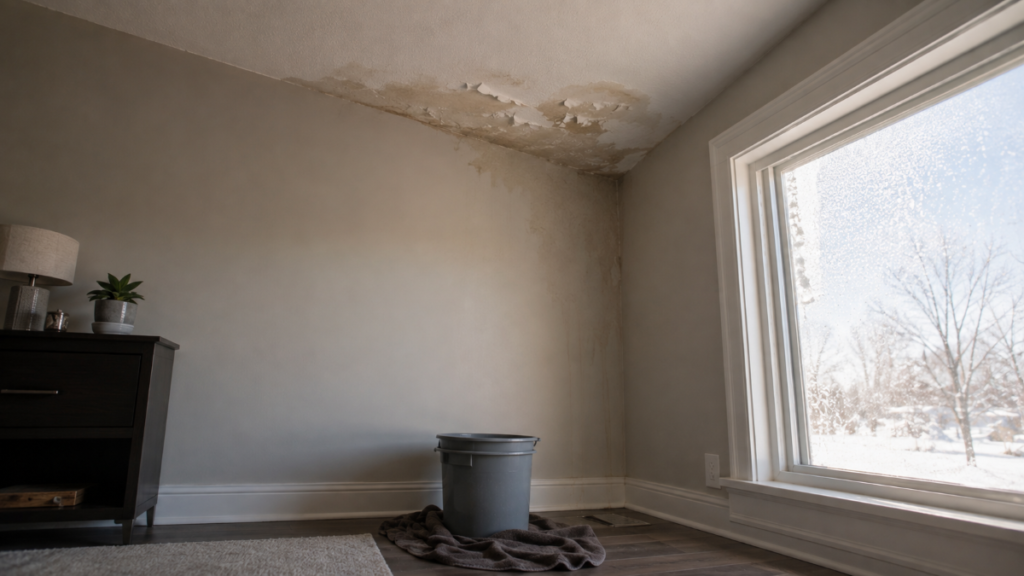
A ceiling stain during a thaw is an active leak, not a cosmetic problem. Work through this in order.
- Protect the space below. Move furniture and contents clear, and put down containers and sheeting.
- Treat it as an electrical hazard. If water is near a light fixture, ceiling fan or smoke detector, shut off power to that circuit and stay off wet ceilings.
- Relieve a bulging ceiling carefully. A sagging, water-filled drywall bulge will eventually let go on its own. A small relief hole at the low point, with a bucket under it, is safer than a collapse — but only if you can do it without standing under a heavy load.
- Photograph everything — the ceiling, the roof edge and icicles from the ground, and the attic if you can reach it safely. Do this before any cleanup.
- Do not climb onto the roof. An iced Calgary roof in winter is one of the most dangerous places on a property.
- Call your insurer and a restoration company the same day. Drying has to start quickly, and the attic almost always needs professional assessment because the visible stain rarely marks the full extent.
Do not simply repaint the stain once the thaw ends. The water is still in the insulation and framing, and the dam will return with the next chinook. Our guide on what to do if water is leaking from your ceiling covers the immediate steps in more depth.
Safe removal, and what wrecks a roof
How an ice dam is removed matters, because the common DIY approaches cause more damage than the dam.
Do not chip it off. Hammers, axes, chisels and shovels crack shingles and gouge the sheathing underneath. You will trade a water problem for a roof that leaks year-round.
Do not use rock salt or calcium chloride pucks on shingles. They corrode metal flashing and eavestrough, shorten shingle life, stain siding and kill the planting below.
Do not use a pressure washer or open flame. Pressure strips granules off shingles; heat sources on a roof are a fire risk and a personal safety risk.
The accepted professional method is low-pressure steam, which melts a channel through the ice without harming the roofing beneath it. Clearing snow from the lower roof with a roof rake from the ground — never from a ladder — also removes the fuel for the next dam and is the one preventive step a homeowner can safely take mid-winter.
Removal and restoration are two different jobs. Steaming the dam stops more water getting in; it does nothing about the water already in your attic and walls. That part needs moisture readings, targeted drying and, where insulation is saturated, removal and replacement.
Fixing the cause: attic heat, insulation and ventilation
Because ice dams are driven by heat escaping into the attic, the permanent fix is upstairs, not on the roof. Three measures, in this order:
- Air sealing. Seal the bypasses that let warm indoor air into the attic — around pot lights, the attic hatch, bathroom and kitchen exhaust fans, plumbing stacks and wiring penetrations. This is the highest-value step and the one most often skipped.
- Insulation. Bring attic insulation up to current levels and keep it even, with no thin or compressed areas over exterior walls.
- Ventilation. Balanced intake at the soffits and exhaust at the ridge keeps the roof deck close to outdoor temperature. Make sure insulation has not blocked the soffit vents — a very common fault.
Two more details matter in Calgary homes. Bathroom and dryer vents must terminate outside the building, not into the attic, where they dump warm moist air directly against the roof deck. And heat cables are a symptom-management tool, not a cure: they keep a channel open but do nothing about the heat loss, and they add operating cost every winter.
Keep eavestroughs and downspouts clear before freeze-up so meltwater has somewhere to go, and clear roof snow after heavy falls. Done together, these steps address the cause rather than the annual emergency.
Why DKI Calgary is the right choice for ice dam damage

DKI Calgary is part of North America’s largest disaster restoration network, and winter water losses are a large share of what we handle between November and March. Ice dam damage is deceptive work: the ceiling stain is usually the smallest part of it, and the water has often travelled through insulation and wall cavities well away from where it appears.
We locate the full extent with moisture meters and thermal imaging rather than guessing, dry the structure properly, and remove saturated insulation where it can no longer do its job. Because we handle water and flood damage restoration, mould remediation and rebuild in-house, one team takes the job from the emergency call to the repainted ceiling.
We also document the loss the way adjusters need it — which matters more than usual with ice dams, where coverage turns on whether the damage was sudden and whether the home was maintained. Local, certified and available any hour, we are who Calgary calls when winter gets inside.
Conclusion
Ice dams in Calgary are a heat problem disguised as a weather problem, and our chinooks run the melt-freeze cycle that builds them over and over through the winter. The ice is not what costs you money — the meltwater backing up under the shingles into insulation, ceilings and walls is. Insurance will generally pay for that sudden interior damage but not for the ice removal or the roof, and it may pay for none of it if the leak was gradual or the attic was neglected. So handle the emergency safely, never chip or salt a roof, get the structure properly dried, and then fix the cause upstairs with air sealing, insulation and ventilation. That is what stops the stain coming back next January.
Frequently Asked Questions
What causes ice dams on a Calgary roof?
Heat escaping from the house into the attic melts snow on the upper roof, and that water refreezes at the cold overhanging eaves, building a ridge of ice. Calgary’s chinooks repeat this melt-and-refreeze cycle many times each winter rather than once in spring.
Does home insurance cover ice dam damage?
Most policies cover the sudden interior water damage — ceilings, walls, flooring and contents — subject to your deductible. They generally do not cover removing the ice dam or repairing the roof, and claims can be denied where the leak was gradual or maintenance was poor.
How do I get rid of an ice dam safely?
Low-pressure steam applied by a professional is the only method that removes the ice without damaging shingles. Never chip at it with tools, use rock salt or calcium chloride on shingles, or climb onto an iced roof — each causes damage or serious injury risk.
Are icicles on my roof a problem?
Large icicles along the eaves usually mean an ice dam is forming behind them, since both come from meltwater refreezing at the roof edge. They are a visible warning that heat is escaping into your attic and water may already be backing up under the shingles.
Will heat cables stop ice dams?
Heat cables keep a drainage channel open but do not address the heat loss causing the dam, and they add electricity cost every winter. They are a useful stopgap on a difficult roof, not a substitute for air sealing, insulation and attic ventilation.
My ceiling stain dried on its own — do I still need it looked at?
Yes. A dry stain does not mean a dry attic; insulation and framing hold moisture long after the surface dries, and mould can develop within 24 to 48 hours. The dam will also return with the next thaw unless the underlying heat loss is fixed.