
Table of contents
- Quick summary — the one-minute checklist
- Why this matters in Calgary (storms, trees, local responsibilities)
- Immediate safety steps (first 0–30 minutes)
- Who to call first: emergency services, utilities, and insurers
- Documenting damage: photos, inventory, and proof of loss
- Temporary protection: when and how to tarp and board up your roof safely
- Tree removal: why hire professionals, what to expect, and costs
- Structural inspection and shoring — when your house is unsafe
- Insurance claims: what’s usually covered and how to speed your claim
- Restoration & cleanup — how DKI Calgary helps (mitigation, drying, reconstruction)
- Dealing with water/secondary damage after the tree falls (roof leaks, attic, insulation)
- Smoke odor and soot — how to remove smoke smell from clothing and contents (comprehensive guide)
- Contents restoration: dry cleaning, ultrasonic, deodorization, and professional options
- Preventative steps for the future (trees, maintenance, emergency kit)
- FAQs (liability, neighbour’s tree, power lines, costs)
- Final checklist & contact info for DKI Calgary
1) Quick summary — the one-minute checklist
If a tree falls on your home during a Calgary storm:
- Make sure everyone is safe and call 911 if there are injuries or fire.
- If you smell gas or see sparks, leave immediately and call 911 and your gas/electric utility.
- Don’t go near downed power lines — treat them as live.
- Call your insurer to open a claim and document everything with photos and video.
- Arrange emergency tarping/board-up and a professional tree removal crew (don’t try to remove large trees yourself).
2) Why this matters in Calgary
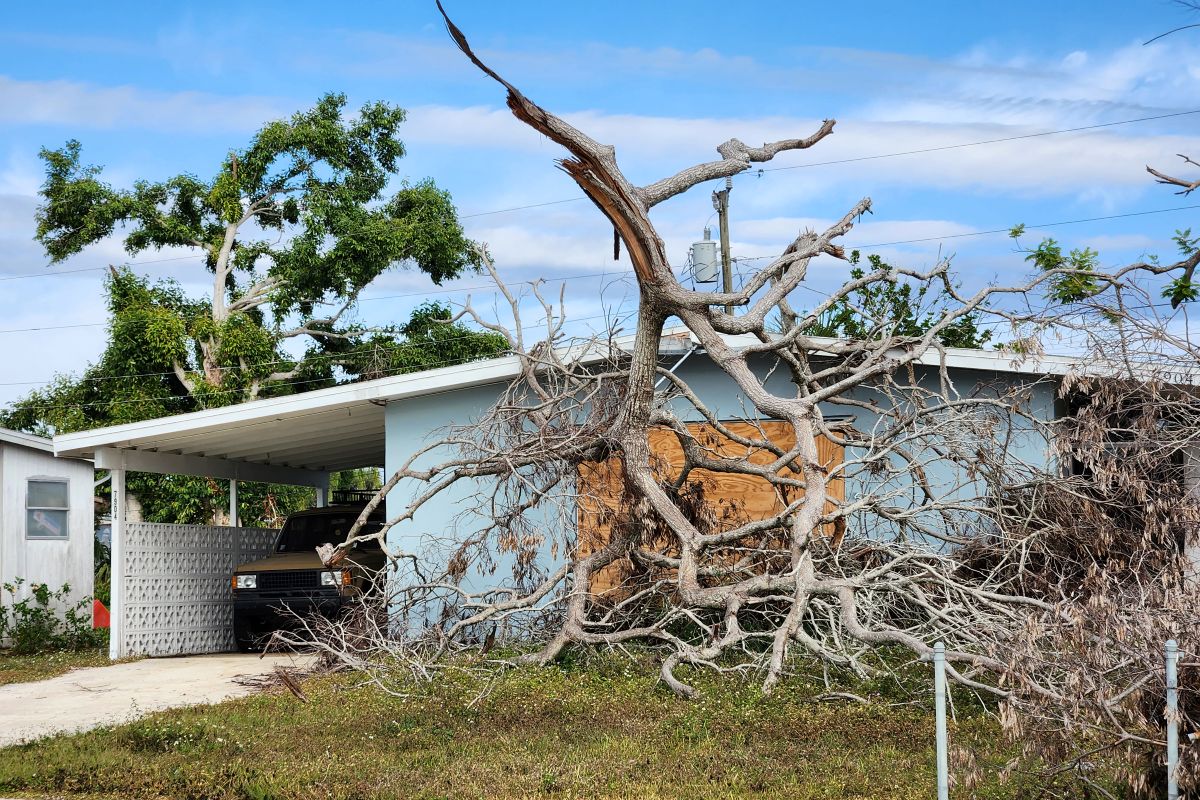
Calgary sees intense weather events — strong wind gusts, microbursts and heavy spring/fall storms — that can uproot or break trees. When a tree strikes a house it causes two kinds of immediate risk: danger to people (falling timber, structural collapse, electrical fire) and rapid secondary damage (rainwater entering through the hole, collapsed ceilings, mould growth). The City of Calgary makes clear that removal of trees on private property is the property owner’s responsibility — and if a tree hit power lines you must contact your utility immediately.
3) Immediate safety steps (first 0–30 minutes)
- Check for injuries. Tend to anybody hurt and call 911 for serious injuries.
- Evacuate if the structure is compromised. If you see sagging floors, major ceiling collapse, or heavy leaning that suggests further collapse, leave immediately.
- Avoid electrical hazards. If the tree touched electrical lines or you see sparks/flames, keep everyone clear and call 911 and your utility. Never attempt to move a tree off a power line.
- Shut off utilities if safe. If you can access the main breaker or gas valve safely and there’s no imminent danger, shut them off to reduce risk of fire or explosion. If you’re unsure, wait for utility crews.
- Keep kids and pets away. Falling branches or weakened parts of the tree can still cause harm.
4) Who to call first: emergency services, utilities, and insurers
- 911 — if anyone’s injured, there’s fire, gas smell, or the scene is immediately dangerous.
- Your local utility (ENMAX in Calgary) — for downed power lines or gas concerns, call the power trouble line (ENMAX/utility numbers are typically printed on bills or the city website). If the tree hit a power line, the utility must handle it.
- Insurance company — call to start a claim as soon as it’s safe. They will guide next steps and may dispatch an adjuster. The Insurance Bureau of Canada advises contacting your insurer immediately and documenting the damage — these steps are essential for claims and for a “proof-of-loss” if required.
- Certified arborist / emergency tree removal — don’t hire the first person who knocks on the door; choose a licensed, insured tree-removal company with experience in storm work. They will safely remove unstable sections.
5) Documenting damage: photos, inventory, and proof of loss
Document everything before cleanup where possible:
- Take wide shots (context) and close-ups (damage to roof, gutters, walls, contents).
- Video a walkthrough describing damage verbally (speak dates/times into the recording).
- Make a list of damaged contents with estimated value; include serial numbers if possible. Insurance companies often require a “proof of loss” within a set period — gather receipts or photos of previous ownership where you can.
Tip: Time-stamp photos and back them up to cloud storage right away.
6) Temporary protection: when and how to tarp and board up your roof safely
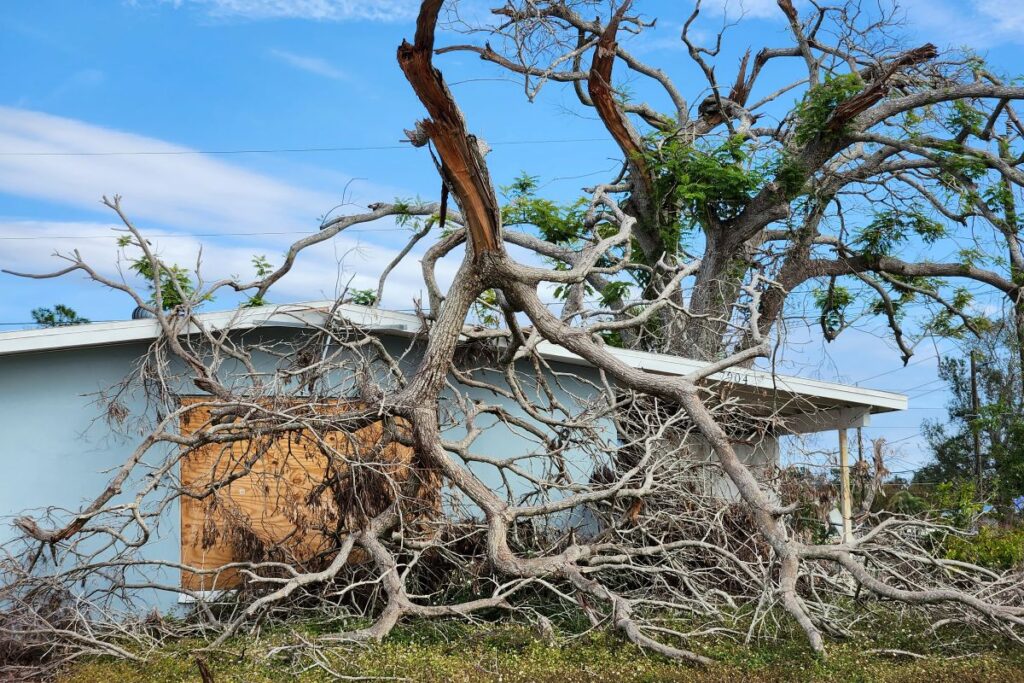
Why: Once the tree punctures the roof, rain and wind accelerate secondary water damage — soaked insulation, drywall collapse, mould growth. Immediate moisture control reduces long-term repair costs.
Do’s and don’ts:
- Do call a professional restoration company (like DKI Calgary) to perform emergency tarping and board-up. Trained restoration pros will install tarps correctly and safely and will coordinate with insurers.
- Don’t climb onto a heavily damaged roof yourself. Roof sheathing and rafters may be structurally compromised.
- Do keep a safe perimeter below the damaged area — falling material can injure passersby.
- Do keep receipts for any emergency purchases (tarps, boards, emergency services) — insurers often reimburse reasonable emergency mitigation costs.
Basic tarping process (what professionals do): cover the damaged area with a heavy-duty tarp, secure it to wood battens or boards to avoid ripping, fasten to unaffected structural members rather than driving nails through compromised material, and seal edges where possible to shed water. Temporary boards may be installed at windows or broke-in doors to secure the property.
7) Tree removal: why hire professionals, what to expect, and costs
Why professionals: storm-damaged trees are unpredictable — limbs under tension may spring free when cut. Arborists and storm crews have rigging, chainsaws, cranes and the safety training to remove large trees without further damaging the house.
What to expect:
- Assessment by an ISA-certified arborist or experienced crew. They’ll decide on staged removal to protect the structure.
- Staged dismantling — crews remove branches and trunk sections in a controlled manner.
- Debris haul-away — some companies include it; others charge extra. Get a written estimate.
- Salvage vs. full removal — sometimes only part of the tree needs removal; other times full removal is safest.
Costs: vary widely (size of tree, access, whether crane is needed, emergency overtime). Emergency storm removals can cost significantly more than routine removals — document everything and coordinate with your insurer because many policies cover removal when the tree has caused structural damage.
8) Structural inspection and shoring — when your house is unsafe
If a tree penetrates the roof or pushes on exterior walls, an engineer or licensed contractor should inspect for structural integrity before re-entry. Indicators that an inspection is needed:
- Visible sagging of rooflines or floors
- Large cracks in walls or foundation
- Door or window frames that no longer operate
Temporary shoring may be required to prevent collapse. Restoration firms (DKI Calgary included) coordinate structural assessments and will help arrange engineers and licensed contractors if structural repairs or shoring are necessary.
9) Insurance claims: what’s usually covered and how to speed your claim
Typical coverage:
- Structural damage from fallen trees is commonly covered under standard homeowner policies when the cause is a covered peril like wind or storm.
- Removal costs: If a fallen tree causes damage to your home or blocks access, many policies cover removal. If a neighbour’s tree falls onto your home, often your policy covers the damage and removal; your insurer may subrogate against the neighbour’s insurer later.
How to speed the claim:
- Call your insurer immediately and provide your documentation.
- Keep receipts for emergency mitigation (tarps, board-up, emergency tree removal).
- Work with a restoration company experienced with insurance claims — they can provide detailed scope of loss and documentation that insurers expect.
- Be present for the adjuster or provide up-to-date photos and videos if you can’t be there.
Important: don’t sign away your rights or accept a low settlement without documentation. If you’re unsure about the insurer’s response, restoration companies or public adjusters can help you navigate disputes.
10) Restoration & cleanup — how DKI Calgary helps

DKI Calgary is a local franchise of DKI Canada that offers 24/7 emergency mitigation and full restoration services. After initial safety and mitigation (tarps, tree removal coordination), DKI handles:
- Water extraction and drying (if rain entered the structure) following industry standards to prevent mould and structural deterioration. IICRC S500 guidelines are widely used in the restoration industry for water damage procedures.
- Mould inspection & remediation when secondary moisture risk exists.
- Contents inventory and pack-out for salvage, cleaning and deodorization.
- Smoke & soot cleanup (if fire or smouldering occurred) and deodorization.
- Reconstruction: from roof decking and drywall repair to full rebuilds if necessary.
Working with a single restoration company reduces coordination headaches — they document loss, perform mitigation, and liaise with insurers and subcontractors.
11) Dealing with water/secondary damage after the tree falls
Water entry is the #1 cause of follow-on damage after a tree strike. Key steps:
- Extract standing water quickly and begin structural drying — trapped moisture causes insulation saturation, drywall softening and mould within 48–72 hours. Restoration firms use industrial dehumidifiers, air movers and moisture meters to track drying.
- Remove wet insulation — often insulation must be removed and replaced.
- Dry attic spaces thoroughly — insufficient drying causes attic mold and insulation damage.
- Test for mould & hidden moisture — restoration pros use infrared cameras and moisture probes to find concealed wet pockets.
12) Smoke odor and soot — comprehensive guide for clothing, fabrics and household items
If the fallen tree caused fire, smouldering, or the house had prior smoke exposure during an event, smoke odor can cling to clothing, soft goods, and contents. Here’s a practical, comprehensive approach — from DIY to professional.
Understanding smoke odor
Smoke contains tiny particles and odor molecules (volatile organic compounds) that embed in fibres. Effective removal requires: (A) removing particulate soot, (B) neutralizing/sorbing odor molecules, and (C) proper drying/airing.
Step A — initial handling and safety
- Wear gloves and a dust mask when handling soot-covered items — soot is messy and can irritate skin.
- Do not rub soot into fabrics; brush gently or vacuum with a HEPA-filter vacuum (use a soft brush attachment). If clothing is heavily sooted, bag separately for professional cleaning.
Step B — home laundering methods (for washable items)
- Shake and brush outside to remove loose soot and ash.
- Pre-soak: Use one of these presoak recipes before machine washing:
- Vinegar soak: 1–2 cups white vinegar in a warm-water soak for 30–60 minutes (vinegar neutralizes odors).
- Baking soda: add ½ to 1 cup baking soda to the wash or presoak (baking soda absorbs odors).
- Use heavy-duty detergent and wash at the hottest safe temperature for the fabric. Repeat wash if necessary.
- Add laundry products: Washing boosters like oxygen bleach (not chlorine bleach unless safe for fabric) can help remove organic residues.
- Air-dry outside when possible (sun and breeze help remove odors), but keep delicate fabrics out of direct sun to avoid fading.
Step C — non-washable or delicate fabrics
- Dry-clean only garments: bring them to a professional cleaner and tell them the garments were exposed to smoke so they can use appropriate solvents and ozone/thermal treatments. For delicate or structured garments (suits, furs) do not try home soaking.
- Upholstery, mattresses, pillows: often need professional cleaning; some may be unsalvageable if deeply penetrated by smoke and soot.
Step D — home remedies for persistent odor
- Activated charcoal in a sealed container placed with non-washable items absorbs VOCs over 24–72 hours.
- Baking soda: place open boxes in sealed containers or bags with items for 24–72 hours.
- Commercial odor neutralizers: enzyme-based sprays and odor eliminators can help; test on a hidden area first.
- Ozone generators — can neutralize smoke odor but must be used by professionals; they’re hazardous to people, pets and plants if used improperly.
Step E — professional options (when DIY fails)
- Professional laundering and deodorization: restoration firms and specialized textile restorers use rinses, ultrasonic cleaning, and commercial-grade deodorization (thermal fogging, hydroxyl generators) to remove smoke odor from a wide range of items. DKI-affiliated content recommends professional cleaning for sentimental or high-value items.
Quick recipe summary (washable clothes)
- Pre-soak: 1 cup white vinegar in warm water for 30–60 minutes.
- Wash: heavy-duty detergent + ½ cup baking soda; hottest safe water.
- Dry: air dry or machine dry (if safe) — repeat if smell persists.
13) Contents restoration: dry cleaning, ultrasonic, deodorization, and professional options
When items are valuable, sentimental or complex (electronics, antiques, paintings), DIY cleaning is risky. Restoration pros offer:
- Pack-out & inventory — contents removal to a clean facility for restoration and safe storage.
- Ultrasonic cleaning — effective for small metal, ceramic or hard-to-clean items (user’s business Calgary Contents specializes in these methods).
- Electronics restoration — trained techs assess and clean water/smoke-damaged electronics; some devices can be refurbished, others require replacement.
- Thermal fogging and hydroxyl generators — used to neutralize smoke odor in rooms and contents without leaving chemical residues.
- Decontamination — if the tree caused contamination (wildlife, sewage, chemical exposure), professionals follow safety standards for decontamination and proper disposal.
14) Preventative steps for the future
- Tree maintenance — have an ISA-certified arborist inspect mature trees regularly and prune hazardous limbs. Well-maintained trees are less likely to fail in storms.
- Create a storm plan — emergency numbers, evacuation plan, and a safe meeting place.
- Home reinforcement — keep gutters clear, install roof straps if needed, and use impact-resistant roofing materials where appropriate.
- Insurance review — confirm coverage for fallen trees and sewer backup, and keep an up-to-date home inventory (photos, receipts) in cloud storage.
15) FAQs

Q: If my neighbour’s tree falls on my house, who pays?
A: Typically your homeowner’s insurance will cover your property damage; your insurer may pursue the neighbour’s insurer if the neighbour was negligent. Coverage specifics depend on your policy.
Q: Is tree removal covered if the tree didn’t damage the house but landed in my yard?
A: Coverage varies — many insurers only cover tree removal costs if the tree caused damage to a covered structure or blocked access. Check your policy.
Q: Can I DIY tarping to save money?
A: You can, but inexperienced tarping can make problems worse (improper fastening causing more roof damage, safety risk). Professionals do it faster and safer and insurers typically accept professional mitigation receipts.
Q: What if the tree brought pests or wildlife into my attic?
A: Notify your restoration company and insurer — you may need pest control and contaminated insulation replaced.
16) Final checklist & contact info for DKI Calgary
Immediate:
- Ensure everyone is safe. Call 911 if injured or fire/gas.
- Don’t touch downed power lines — call utility.
- Document damage (photos/video).
- Call your insurer and open a claim.
- Arrange emergency tarping/board-up and professional tree removal.
Restoration:
- Contact DKI Calgary for 24/7 emergency mitigation, drying, contents restoration, mould remediation, and reconstruction. DKI Calgary coordinates with insurers and certified contractors for a streamlined recovery.